














May is the best month in publishing — the industry knows that readers are ready to commit to longer, more absorbing books as the days get longer, and the releases reflect that ambition. This month specifically is exceptional: Kathryn Stockett’s first novel in seventeen years, a new David Sedaris essay collection, a Douglas Stuart return, and a summer romance that doesn’t apologize for being exactly what it is. Five books worth reading, chosen specifically for the Grit and Glam reader who wants something that holds up through the full summer rather than disappearing from memory by July. The spring reading list from last month (Beth’s Spring Reading List) covered the books that have been in the conversation for a while. These are the ones arriving right now.
What You’ll Find In This Post:
5 Books Worth Reading This May
1. The Long-Awaited Return
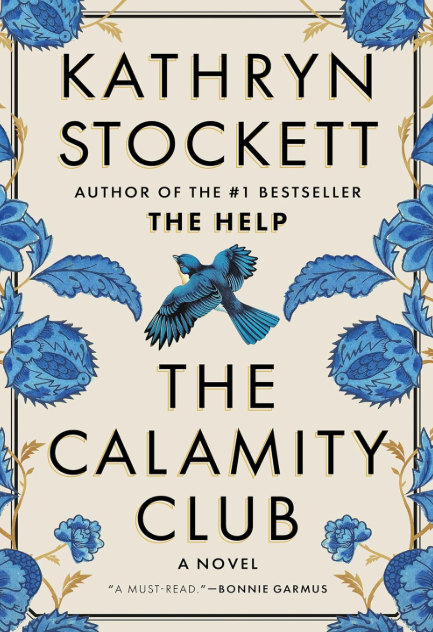
The Calamity Club by Kathryn Stockett
Kathryn Stockett published The Help in 2009 — it sold millions of copies, became a film, and generated a cultural conversation that lasted years. Seventeen years later, her second novel arrives, and it earns the wait. Set in Depression-era Mississippi, The Calamity Club follows three women who form an unlikely alliance in the face of injustice, discovering that even small acts of defiance can shift what seemed immovable. Described as confident, heartfelt, and humorous, it marks her first new book since The Help. The Depression-era Mississippi setting allows Stockett to revisit the terrain of moral courage and female solidarity that made The Help so compelling, but with a story and characters entirely her own.
Why it belongs on the May list: This is the novel that people are going to be talking about all summer — the kind of book that generates the three-hour dinner conversation that good fiction makes possible. If you read The Help, you owe yourself this one. If you didn’t, it stands entirely alone.
2. The Essays Worth Pre-Ordering Now
The Land and Its People by David Sedaris
David Sedaris reflects on what it means to be a foreigner, a brother, and a lifelong friend in essays that Publishers Weekly calls “among the best of his career.” He tries on the role of caretaker after his partner’s hip-replacement surgery, discusses his brother with a jaded Duolingo bot, and rides a horse named Tequila in Guatemala. Kirkus gave it a starred review and calls him “a national treasure.” It’s out May 26 — around 2 weeks from today — which makes it the pre-order worth placing now so it arrives the moment you’re ready for it.
Why it belongs on the May list: The essay collection is the ideal spring and summer reading format — each essay is self-contained, which means you can read one with morning coffee and one in an afternoon without losing the thread of a longer narrative. It’s the book that makes a thirty-minute reading window feel as satisfying as an hour.

3. The Literary Fiction That Lives With You
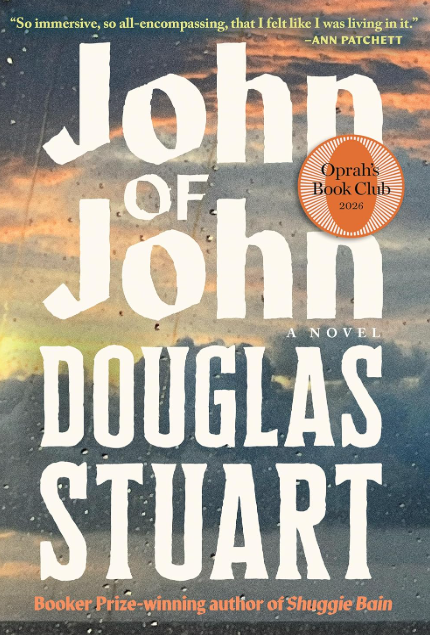
John of John by Douglas Stuart
Douglas Stuart won the Booker Prize for Shuggie Bain — the novel about a boy in 1980s Glasgow and his complicated, profound relationship with his alcoholic mother — and earned every word of the praise that followed. His second novel returns to the themes that made Shuggie Bain so powerful: desire, damage, class, and the way the places we come from shape us in ways we spend our whole lives trying to understand. Set in the Hebrides, John of John looks at desire, damage, class, and homecoming with the bleak tenderness that has become Stuart’s signature. When struggling artist John-Calum Macleod returns to his parents’ home on the Isle of Harris, he finds himself at odds with his preacher father — and discovers that his father may also be keeping secrets.
Why it belongs on the May list: This is the novel for the reader who wants to be genuinely moved rather than entertained — who reads to understand something true about the way people love each other badly and love each other anyway. Not a light read, but the kind of book that earns the time you give it in the way that only the best literary fiction does.
4. The Quiet Novel That Hits Hard
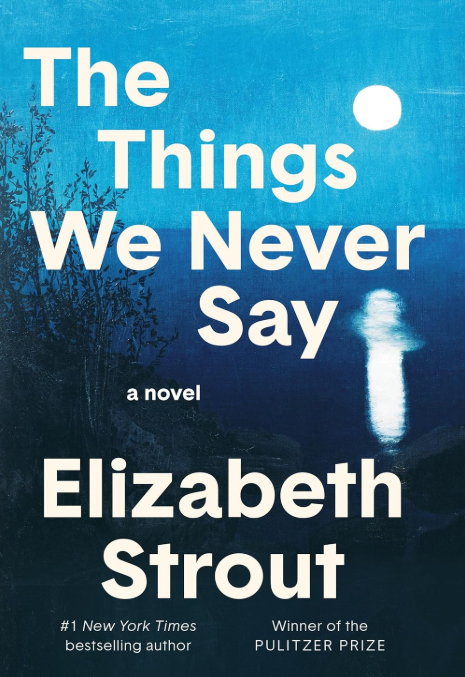
The Things We Never Say by Elizabeth Strout
Elizabeth Strout has been one of the most consistently excellent novelists in American fiction for two decades — Olive Kitteridge, My Name Is Lucy Barton, the Amgash series — and she has never published a bad book. The Things We Never Say centers on a man named Artie Dam, a Massachusetts history teacher facing a life-altering revelation, a departure from her Maine-based works. Few writers are better at making quiet prose feel seismic. Strout writes about the interior lives of ordinary people with a precision and tenderness that makes you feel recognized rather than observed — her characters are not remarkable in the literary sense, and that is exactly what makes them feel true.
Why it belongs on the May list: This is the novel for the reader who has finished a Strout novel and immediately wanted to start another one. It’s also a strong entry point for readers who haven’t encountered her — the new setting (Massachusetts rather than Maine) makes it genuinely accessible without any knowledge of her previous work.
5. The Summer Romance That Earns Its Place
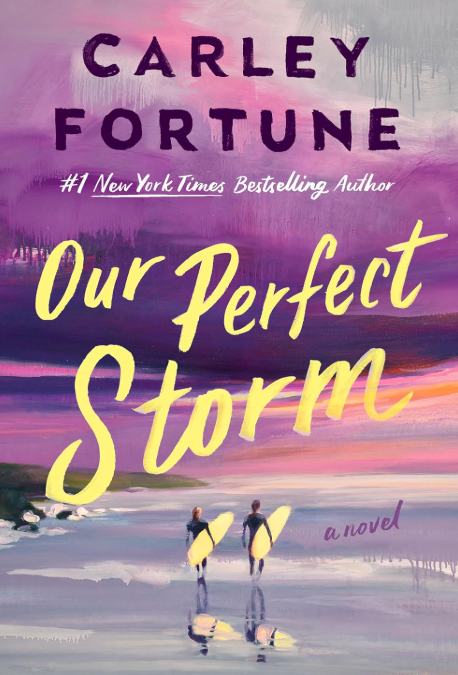
Our Perfect Storm by Carley Fortune
Carley Fortune writes contemporary romance the way it should be written: smart, emotionally honest, with characters who feel like actual people rather than archetypes, in settings that make you want to go there. Our Perfect Storm brings contemporary romance in Fortune’s signature style — the coastal setting, the second-chance or forced-proximity premise, the relationship that develops with the kind of pacing and earned emotional tension that distinguishes her work from the category at large. After Every Summer After and Meet Me at the Lake, Fortune has established herself as the writer who takes the beach read seriously, and this is the summer novel worth having in the beach bag.
Why it belongs on the May list: Every reading list needs the book that you read in two sittings and feel unreasonably happy about when you’re done. This is that book. No apology required. The porch, a cold drink, the afternoon. That’s the whole plan.
What Makes a Good Summer Read
It should pull you forward. The best summer books have a propulsive quality — you finish a chapter and immediately start the next one rather than setting the book down. All five books here have that quality, for different reasons: Stockett through story, Sedaris through wit, Stuart through emotional intensity, Strout through precision, Fortune through relationship momentum.
It should hold up to interruption. Summer reading happens in fragments — the afternoon that gets cut short, the chapter before the guests arrive, the twenty minutes on the porch before dinner. The books worth choosing are the ones that don’t punish interruption with confusion when you return.
It should give you something to talk about. The Stockett, the Stuart, the Strout — all three are the books that generate real conversation, that make you want to press a copy into someone else’s hands. That’s the quality worth seeking in a summer read: not just entertainment but material.
The essay collection earns its own category. The Sedaris belongs in the bag alongside one of the novels — it’s the book you read in the gaps, the fifteen minutes at a time that add up to a complete and satisfying reading experience. A novel and an essay collection together cover every reading window the summer produces.
Mini FAQ
From early reviews: similar in its warmth, its moral seriousness, and its interest in female solidarity, but a different story in a different era with entirely new characters. Readers who loved The Help for its emotional resonance and its historical specificity will find both qualities in the new novel.
No — John of John is a standalone novel with entirely new characters and setting. Readers who loved Shuggie Bain will recognize Stuart’s signature voice and emotional register; readers coming to him for the first time will find the novel fully self-contained.
Yes — Fortune writes literary romance rather than genre romance, with character development and prose quality that appeal to readers who don’t typically seek out the category. If you’ve ever enjoyed a novel where a relationship is central to the story without it being the entire story, Fortune is the right place to start.
The Sedaris essays are individually short — some twenty minutes, some forty — which makes the collection the fastest to move through when reading time is limited. The Fortune novel reads quickly because of its pacing. The Stuart and Strout are slower, more deliberate reads.
More Reading Inspiration
For the spring reading list that preceded this one — the six books worth reading alongside these new May releases — Beth’s Spring Reading List: 6 Books We Can’t Stop Talking About covers the backlist reads that have been generating conversations since April. And for the audio companion to any reading list — the podcasts worth listening to on the spring walks that the longer days are making possible — 5 Podcasts Worth Adding to Your Rotation is the weekend companion post.

Closing Thoughts
Happy Reading Weekend
The Stockett for the story. The Sedaris will be for the wit. The Stuart for the emotional depth. The Strout for the precision. The Fortune for the afternoon. Five books, five different ways of spending the time that May is finally making available. The porch is warm, the light is staying late, and the best reading month of the year is two weeks old. There’s still plenty of time to make the most of it.