














Here is a quiet truth about self-care that the wellness industry doesn’t spend much time on: the most impactful things you can do for your health, your appearance, and your general quality of life are not the products or the rituals or the morning routines. They are the appointments you keep making excuses to reschedule. The dermatologist you’ve been meaning to see since last summer. The dentist whose reminder card has been on your counter for three months. The colorist you told yourself you’d call after the holidays.
Spring is the natural reset point — the season that makes fresh starts feel possible and the calendar feel manageable before summer fills it completely. Book these appointments now. Your future self, who will thank you in August when the skin check catches something early and the teeth are clean and the hair color is right, will be grateful you did it in April.
What You’ll Find In This Post:
The Spring Appointment Checklist
1. The Dermatologist — Annual Full-Body Skin Check
Book it: April or May, before summer sun exposure begins.
The annual full-body skin check is the appointment most women over 50 know they should keep and most frequently let slide. It takes twenty minutes. It can catch melanoma, basal cell carcinoma, squamous cell carcinoma, and precancerous lesions at the stage when treatment is straightforward rather than complex. Spring is the right time specifically because it happens before the summer sun exposure that makes new spots appear — a baseline check now means any changes that develop over the summer have a clear before-state to compare against.
What to ask at the appointment: Point out any spots you’ve been watching. Ask specifically about any area that has changed in size, color, or border. Ask whether your current SPF routine is appropriate for your skin tone and history.
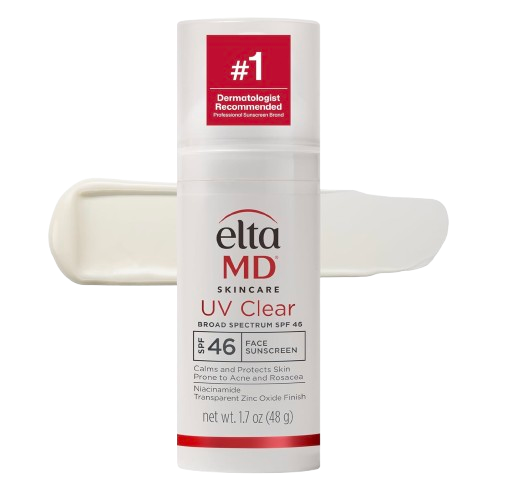
While you wait: Start using SPF daily if you aren’t already — the EltaMD UV Clear SPF 46 is the dermatologist-recommended mineral formula covered in my Allergy Season Skincare post, appropriate for all skin types and the right SPF to establish as a daily habit before the appointment confirms you should be wearing it.
2. The Dentist — Cleaning and Annual Exam
Book it: April, if you haven’t been since last fall.
The twice-yearly cleaning is the appointment that most people let stretch to annually and then occasionally further. Beyond the obvious cavity-prevention function, the dental cleaning removes the tartar buildup that home brushing and flossing can’t address, and the annual exam catches gum disease, oral cancer, and structural issues at the stage when intervention is simple. For women over 50 specifically, bone density changes can affect jaw health and tooth retention in ways that regular dental monitoring catches early.
What to ask at the appointment: Whether your gums show any sign of recession or disease. Whether your bite has shifted. Whether whitening is appropriate for your current enamel health.
While you wait: The Hismile Whitening Toothpaste with PAP+ is the at-home whitening formula that delivers visible brightening without the sensitivity that peroxide-based whitening causes — use it in the weeks before the appointment for a cleaner starting point when you go in.

3. The Eye Doctor — Annual Eye Exam
Book it: Before your current glasses or contact prescription expires, or annually regardless.
Vision changes in the fifties and sixties are common, gradual, and easy to miss precisely because the change is slow enough that you adapt to it unconsciously. An annual eye exam catches prescription drift, glaucoma (which has no symptoms until damage is advanced), macular degeneration, and the beginning of cataracts — all of which are meaningfully more manageable when caught early. For contact lens wearers, the prescription expiration is the natural forcing function; for glasses wearers, the exam often slips when nothing seems obviously wrong.
What to ask at the appointment: Whether your prescription has changed. Whether there are any early signs of glaucoma, macular degeneration, or cataracts. Whether blue light or UV-protective coatings are appropriate for your prescription and lifestyle.

While you wait: The Rohto Dry-Aid eye drops are the over-the-counter lubricating drop specifically formulated for the chronic dry eye that screen time and hormonal changes can cause in midlife — use them daily while you wait for the appointment that may recommend a prescription alternative.
4. The Colorist — Color Refresh Before the Season Starts
Book it: Now, before the May and June backlog when everyone has the same idea.
Whether you’re maintaining color, managing gray, or doing a full seasonal shift, the spring color appointment is the one worth booking early because colorists fill up in April and May the way dermatologists fill up in June. The specific conversation to have this spring: whether your current formula and shade is still working with your complexion in spring light (winter formulas often run slightly warmer and darker than what works in spring), and whether any lightening or brightening is appropriate for the season.
For the women who are embracing gray or silver: the spring colorist appointment is still relevant — a toner treatment to neutralize brassiness and a gloss for shine are the gray hair maintenance steps that make silver look intentional rather than neglected.
What to ask at the appointment: Whether your formula needs adjusting for the season. Whether your hair’s condition warrants a treatment before color. Whether your grow-out pattern suggests a schedule change.
While you wait: The dpHUE Gloss+ in Clear or the shade closest to your color is the at-home gloss treatment that brightens and refreshes between appointments — ten minutes in the shower, salon-level shine, already covered in my Spring Hair Refresh post.

5. The Gynecologist — Annual Exam and Mammogram Referral
Book it: Whenever your last annual falls due, or now if it’s been more than a year.
The annual gynecological exam and the mammogram referral that typically comes with it are the two most frequently deferred appointments on this list and the two with the most significant stakes. For women over 50, annual mammography is the screening tool with the best evidence base for catching breast cancer at the most treatable stage. The gynecological exam catches cervical changes, hormonal concerns, and the physical changes of perimenopause and menopause that significantly affect quality of life and are frequently undertreated simply because women don’t bring them up.
What to ask at the appointment: Whether any symptoms you’ve normalized are worth addressing — sleep disruption, mood changes, joint pain, changes in libido. Whether your mammogram schedule is current. Whether bone density screening is appropriate for your age and history.

While you wait: If sleep disruption is on your list of questions, the Hatch Restore 3 sunrise alarm clock covered in my Spring Reset post is the non-prescription intervention that addresses sleep quality at both ends of the night — worth starting before the appointment that may discuss sleep-related hormonal changes.
6. The Primary Care Physician — Annual Physical and Bloodwork
Book it: Spring, when scheduling is typically easier than the fall rush.
The annual physical with comprehensive bloodwork is the appointment that gives you the clearest picture of your actual health status — cholesterol, blood sugar, thyroid function, vitamin D and B12 levels, and whatever else your history warrants. For women over 50, vitamin D deficiency is common and significantly affects energy, mood, bone health, and immune function; it’s also entirely correctable once identified. The annual physical is also the appointment where blood pressure and other chronic disease markers get the baseline documentation that becomes important if anything changes.
What to ask at the appointment: Full thyroid panel if you haven’t had one recently. Vitamin D and B12 levels. Cholesterol breakdown (not just total cholesterol — ask for the full HDL/LDL/triglyceride breakdown). Whether any vaccines are due.
While you wait: If energy and mood have been lower than they should be, the Ritual Essential for Women 50+ multivitamin is the evidence-based daily supplement that addresses the most common nutritional gaps in this life stage — vitamin D3, K2, omega-3, and B12 included — while you wait for the bloodwork that confirms exactly what needs addressing.

7. The Therapist or Counselor — Seasonal Check-In
Book it: April, as a deliberate seasonal reset rather than crisis intervention.
Therapy as a regular practice rather than an emergency measure is one of the most underutilized tools available to women over 50 — the life stage that frequently involves major transitions (retirement, empty nest, aging parents, relationship shifts, health changes) that deserve the kind of sustained, skilled attention that friends and family, however loving, can’t fully provide. A spring check-in with a therapist or counselor — even for someone whose life is going well — is the equivalent of the annual physical for mental health: a baseline, a space for reflection, and a relationship already established if something more acute arises.

While you wait: The Moleskine journal from my Spring Reset habits post is the low-barrier daily practice that supports and extends whatever you work on in therapy — five minutes of evening reflection, three things that went well, one thing you’re carrying. The daily writing doesn’t replace the appointment. It prepares you for it.
How to Actually Book These Appointments
The gap between knowing you should book an appointment and actually booking it is almost entirely friction — the few minutes of finding the number, navigating the hold, and committing to a date feel disproportionately effortful. Here is the system that eliminates most of that friction.
Block thirty minutes right now. Not “sometime this weekend.” Thirty minutes, Friday morning, specifically for booking appointments. Open the calendar, identify the dates you’re available, and make the calls or use the online booking portals back to back. Seven appointments in thirty minutes is entirely achievable when you’re doing them sequentially rather than one at a time across six months.
Use your insurance’s patient portal. Most health insurance plans have online directories that show which providers are in-network and accepting new patients. For the dermatologist and primary care appointments especially, the portal search is faster than a Google search and gives you the insurance confirmation upfront.
Ask for the cancellation list. For the appointments with long lead times — dermatologist, in particular, often books two to three months out — ask to be placed on the cancellation list when you book. Cancellations are common and getting placed on the list requires one extra sentence at booking. It frequently results in an earlier appointment.
Set reminders for the appointment and for the day before. The appointment that gets missed is usually the one that wasn’t in the calendar as an event with a reminder. Set both: the calendar event and a day-before reminder with the address and any prep instructions.
Mini FAQ
Annually for a full-body check is the standard recommendation, with additional visits as needed for specific concerns. Women with a family history of skin cancer, a history of significant sun exposure, or any spots that are changing should see a dermatologist more frequently and shouldn’t wait for the annual cycle if something new appears.
Current guidelines vary by organization, which is worth discussing with your specific physician. The American Cancer Society recommends annual mammograms beginning at 45 for average-risk women, with the option to begin at 40. Women with a family history or genetic risk factors may be advised to begin earlier or to add MRI screening. This is a conversation for your gynecologist based on your specific history.
Yes — dilation allows the ophthalmologist to see the back of the eye, including the optic nerve and retina, in a way that an undilated exam cannot. Glaucoma and macular degeneration are caught through dilated exams regardless of whether the refractive prescription has changed.
Psychology Today‘s therapist finder (psychologytoday.com/us/therapists) is the most comprehensive directory, searchable by insurance, specialty, and location. Many therapists offer a free fifteen-minute phone consultation before the first session. Telehealth options have expanded access significantly — many excellent therapists see patients exclusively via video, which removes the commute barrier entirely.
Write down your questions and concerns before the appointment — the things you’ve been meaning to mention, the symptoms you’ve normalized, the family history details that may be relevant. Doctors are more thorough when patients come prepared with specific questions. Bring a list of all current medications and supplements. Ask directly for the specific bloodwork you want rather than assuming a standard panel covers everything.
A Note on Prioritizing Yourself
The appointments on this list have one thing in common: they are for you, not for anyone else. Not for work, not for the household, not for the social calendar. For you. The preventive health appointments that women over 50 consistently defer are the ones that, kept regularly, prevent the urgent and expensive interventions that become necessary when small things go unmonitored for years. The spring calendar has room. The question is whether you’ll put yourself in it.
For the daily habits that support and extend the work these appointments do, The Spring Reset: 7 Small Habits That’ll Change How You Feel This Season is the companion post for the practices worth building between the visits. And for the small, seasonal pleasures that make taking care of yourself feel worthwhile rather than obligatory, 6 Little Spring Things That Spark Joy is the Friday read that earns everything on this list.

Closing Thoughts
Book the Appointments
Not “when things slow down.” Not after the holidays. Not when you feel like you need it badly enough to justify the time. Now, while the spring calendar is still open and the season is cooperative. Thirty minutes this weekend. Seven phone calls or portal bookings. The dermatologist, the dentist, the eye doctor, the colorist, the gynecologist, the primary care physician, and the therapist. You know which ones you’ve been putting off. Start with those.







Thank you for the encouragement. It’s so easy to put others first or wait for a slower time, which doesn’t happen. I’m going to spend 30 minutes next week making my appointments.