












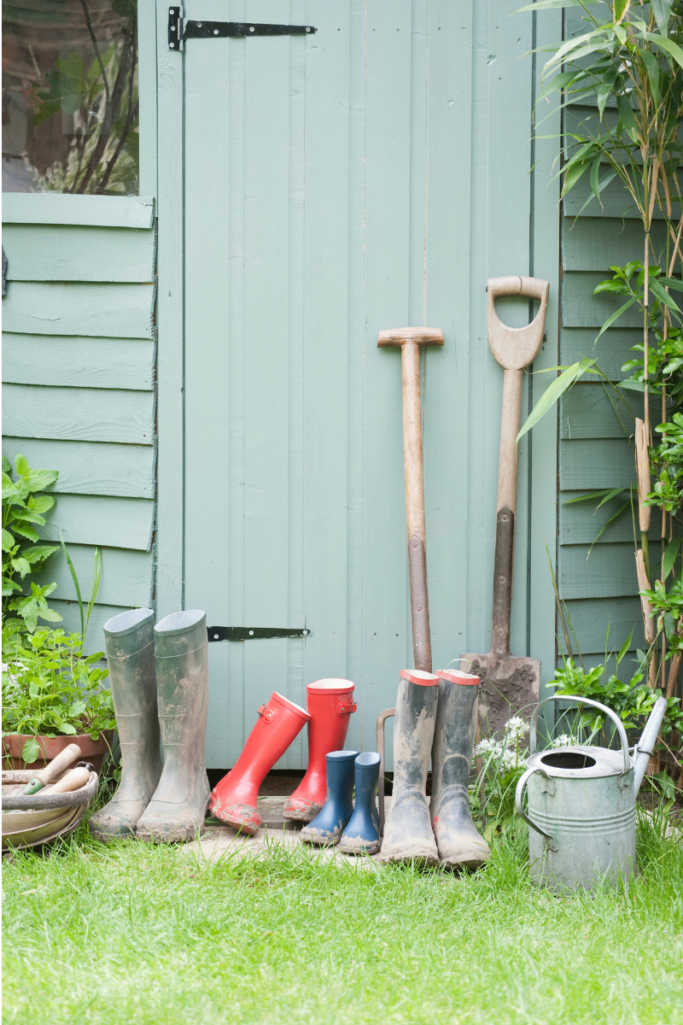
The garage had its moment in my Garage and Mudroom Cleanout post back in March — the wall channels, the utility shelving, the floor cleared and pressure washed. But there’s a second layer to outdoor organization that even a thorough garage cleanout doesn’t always reach: the shed that became a holding zone for everything that didn’t fit anywhere else, the garden tools that are technically hung but completely inaccessible, the hose situation that has been a tangle since last fall, and the seasonal equipment that comes out of storage in April in a state that suggests it was put away without a plan. This is the organizing project that finishes what the garage cleanout started — and that makes the outdoor space genuinely functional for the season ahead.
What You’ll Find In This Post:
- The Outdoor Organization Audit: What to Address First
- 7 Products That Get Outdoor Storage Under Control
- 1. The Tool Tower That Holds Everything and Goes Anywhere
- 2. The Hose Reel That Ends the Tangle
- 3. The Caddy That Brings the Tools to the Garden
- 4. The Storage Deck Box That Handles Everything That Doesn’t Hang
- 5. The Raised Garden Bed That Organizes the Garden Itself
- 6. The Label System That Makes the Garden Findable
- 7. The Kneeling Pad That Makes the Work Sustainable
- Mini FAQ
- More Spring Organization
The Outdoor Organization Audit: What to Address First
Before a single organizing product goes in, the same rule from the garage post applies: everything comes out before anything goes back. For the shed specifically, this is the step that reveals the actual scope of the project — and frequently reveals that a significant portion of what’s in there can be donated, discarded, or relocated to a more appropriate home.
Shed audit questions: What in here have I used in the past twelve months? What is broken, bent, or rusted past usefulness? What belongs in the garage rather than the shed? What is a duplicate of something I also have inside? What is seasonal equipment that needs its own designated space?
Garden tool audit: Anything with a broken handle gets replaced rather than stored — a tool with a compromised handle is a safety issue and a frustration every time you reach for it. Tools with surface rust get a wire brush pass and an oil treatment before storage or use. Tools that belong to a previous gardening project you no longer do get donated.
Hose and irrigation audit: A hose that kinks, has a cracked fitting, or doesn’t retract properly doesn’t get organized — it gets replaced. The organizing system only works for equipment that functions.
7 Products That Get Outdoor Storage Under Control
1. The Tool Tower That Holds Everything and Goes Anywhere
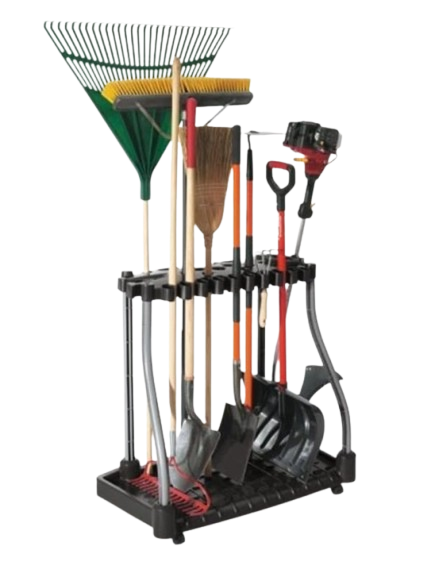
Rubbermaid Garage Tool Tower Rack
The wall-mounted channel system works beautifully for a shed with good wall space. For sheds where wall mounting isn’t practical — or for anyone who wants the flexibility to move the storage rather than committing it to a wall — the Rubbermaid Tool Tower is the freestanding alternative that holds significantly more. Up to 40 long-handled tools store upright with head-down stability thanks to the front clips and curved tubing that keeps tools from shifting or falling. The molded-in weed trimmer holder and electric cord organizer handle the awkward items that never have a good home. Casters make the whole tower mobile — roll it to where you’re working, roll it back when you’re done. No tools required for assembly, and the construction won’t rust, dent, rot, or peel through years of shed exposure. For a shed with a significant tool collection or limited wall space, this is the organizing solution that handles everything in one unit.
The mobility advantage: A tool tower on casters means you can roll it outside the shed while you’re working and return it in one trip — no carrying tools back and forth individually, no leaving them propped against the shed wall where they fall over.
2. The Hose Reel That Ends the Tangle
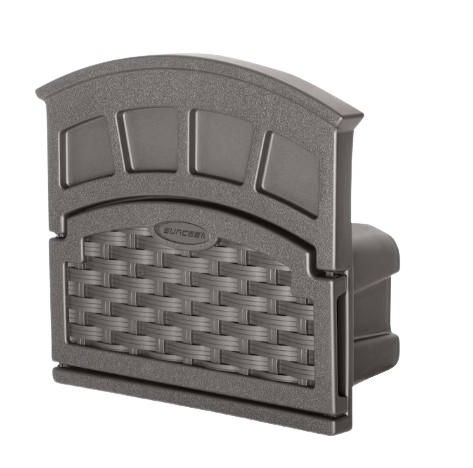
Suncast 150 ft. Wall-Mounted Hose Reel
The garden hose is the outdoor organizing problem that has the simplest solution and yet persists in most yards because the solution requires a ten-minute installation commitment. A wall-mounted hose reel winds the hose after use, keeps it off the ground where it degrades faster, and eliminates the kinking that happens when a hose is coiled improperly on the ground or draped over a faucet. The Suncast 150-foot wall-mount holds a standard garden hose fully extended, has a leader hose that connects to the spigot without requiring the reel to be directly adjacent to the wall connection, and the rewind mechanism is manual-crank rather than retractable — which is more reliable over a longer period of outdoor exposure. Mount it beside the exterior spigot, wind the hose after every use, and the hose situation is permanently resolved.
The practical note: 150 feet of hose capacity is significantly more than most yards require. If your hose is shorter, any excess capacity is simply unused — it’s better to have the capacity than to run out of it mid-yard.
3. The Caddy That Brings the Tools to the Garden
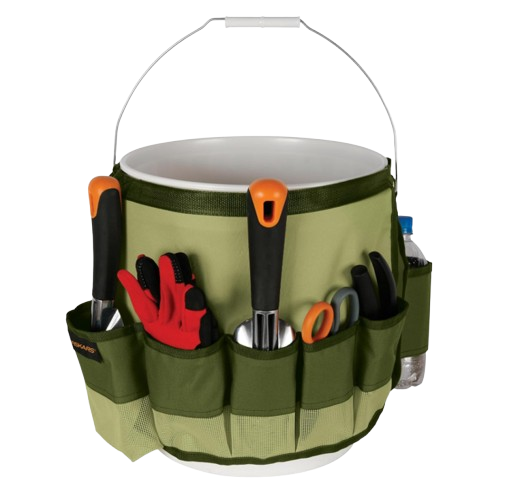
Fiskars Garden Tool Bucket Caddy
Organized storage is only half the project — the other half is how the tools travel from storage to the garden bed and back. A dedicated garden tool bag or caddy that holds the tools you reach for most (trowel, pruners, gloves, kneeling pad, twine) means you’re carrying everything to the garden in one trip rather than making three. The Fiskars Garden Tool Bucket Caddy has multiple exterior pockets for small tools and accessories and fits snugly around a 5-gallon bucket you can get at any home and garden store. Super versatile!
What to keep in it permanently: Trowel, hand fork, pruners, garden gloves, a ball of jute twine, plant labels, and a small watering can for seedlings. Everything you need for a thirty-minute garden session without a second trip.
4. The Storage Deck Box That Handles Everything That Doesn’t Hang
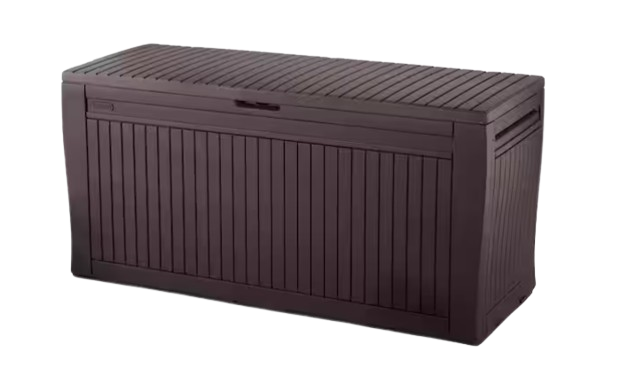
Keter 71 Gallon Resin Outdoor Storage Box
Not everything in an outdoor space hangs on a wall or fits in a caddy. Cushions (yes — despite the patio post, outdoor cushions do need somewhere to go overnight), bags of soil and mulch once opened, garden kneeling pads, the portable sprinkler, extension cords for the string lights, the pressure washer accessories — all of these are outdoor storage items that need a contained, weather-resistant home that isn’t the garage floor. The Keter deck box in 71-gallon capacity is the residential standard: double-wall resin construction that handles outdoor exposure without cracking or fading, a lid that holds up to 485 lbs (a functional seating surface when needed), and no tools required for assembly. It lives on the patio, at the side of the house, or at the corner of the deck — close enough to be used, unobtrusive enough that it doesn’t disrupt the entertaining space.
Sizing guidance: 71 gallons handles the typical seasonal accessory load for one patio or garden zone. If you have significant outdoor storage needs across multiple areas, two smaller boxes (one per zone) are more practical than one large one.
5. The Raised Garden Bed That Organizes the Garden Itself
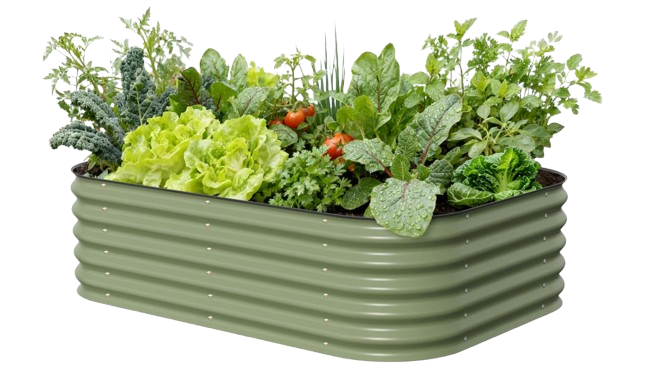
Vego Garden 17-Inch Tall Metal Raised Garden Bed — 6-in-1 Kit
Garden organization is not only about the tools — it’s also about the planting. A raised garden bed defines the growing space, prevents the sprawl that turns a garden into a maintenance project, and organizes what grows where in a way that makes tending it dramatically easier. The Vego Garden metal raised bed is the one worth investing in for longevity: the Aluzinc steel (a zinc-aluminum alloy) resists rust significantly better than standard galvanized steel, the 17-inch height is deep enough for root vegetables and comfortable to tend without excessive bending, and the modular design allows multiple configurations from a standard rectangle to an L-shape or U-shape depending on the space. The organization payoff is immediate — the garden has clear edges, clear paths, and clear zones rather than the amorphous spread that requires constant boundary management.
The prep step: Fill raised beds with a mix of topsoil and compost rather than garden soil — raised beds drain faster than in-ground planting and require a soil mix formulated for the drainage conditions.
6. The Label System That Makes the Garden Findable
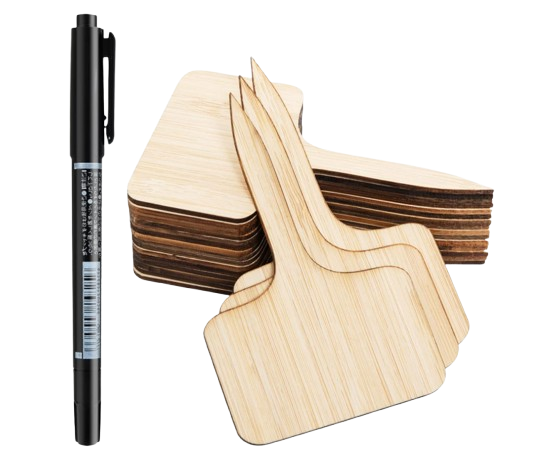
The organized outdoor space is only organized if you can find what you’re looking for without pulling everything up or guessing. Plant labels in the garden solve the specific problem of planted seeds and seedlings that are indistinguishable from each other until they’re several weeks old — and the problem of returning to a perennial bed in April having forgotten what was planted where last fall. These bamboo labels are reusable (write with a pencil, erase and rewrite next season), biodegradable if left in the soil long-term, and at a size that’s large enough to be legible from standing height. The same label system works for potted plants, herb garden pots, and any organized container planting where you need to know what’s in the pot without reading the plant itself.
The seasonal notebook: A companion to the plant labels is a simple outdoor notebook that records what was planted where, when it was planted, and how it performed. The two together — labels in the ground, notes in a book — create the garden record that makes every subsequent spring faster and more informed than the last.
7. The Kneeling Pad That Makes the Work Sustainable
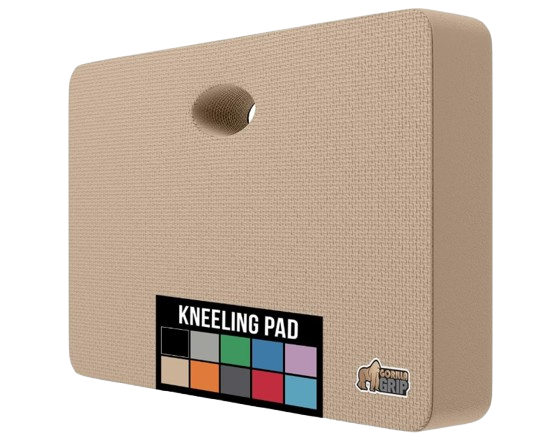
Gorilla Grip Extra Thick Kneeling Pad
This is the organizing product that has nothing to do with storage and everything to do with whether the organized garden actually gets tended. A quality kneeling pad — thick enough to protect knees from hard or rocky soil, large enough to accommodate position changes, waterproof enough to handle damp ground — is the tool that determines whether gardening remains a sustainable activity. The Gorilla Grip pad uses a two-inch thick foam that doesn’t compress flat after a single season of use, has a waterproof cover that wipes clean, and is large enough for both knees simultaneously. It hangs on a hook in the shed or garden caddy between uses and travels to the garden bed in the tool bag. For the spring garden sessions that the raised bed and the organized tools make possible, the kneeling pad is what makes those sessions comfortable enough to happen regularly.
The Outdoor Organization System: Zone by Zone
The Shed: Wall channel for long-handled tools — rakes, shovels, brooms, hoes — mounted at eye height with space between each tool. Shelving (the same heavy-duty wire shelving from the garage post works in a shed) for power tools, soil amendments, and seasonal equipment. Tool bag hanging on a dedicated hook near the door for quick access to hand tools. Deck box for anything that doesn’t hang.
The Garden: Raised bed defines the planting zone. Labels identify what’s planted where. Kneeling pad on the tool bag hook. Hose reel mounted at the nearest exterior wall to the garden for easy access and retraction.
The Patio: Deck box for cushions, entertaining accessories, and outdoor supplies. Hose reel accessible from the patio perimeter. Everything else covered by the patio prep post — which is the outdoor space project that connects to this one at the entertaining layer. See Outdoor Entertaining Prep: Getting Your Patio Spring-Ready for that side of the outdoor space equation.
Mini FAQ
Prioritize vertical: a freestanding tool rack that stands on the shed floor rather than mounting to the wall, over-door organizers on the interior of the shed door for small hand tools and accessories, and a single deck box outside the shed for items that overflow. Small sheds benefit from storing only the tools actively used in the current season — off-season equipment lives in the garage.
After each use, knock off soil, wipe dry, and hang rather than storing in contact with the ground or floor. A light coat of linseed oil on metal tool heads at the beginning of each season provides a rust-resistant barrier. Storing tools horizontally or in contact with each other accelerates rust — vertical hanging, with heads exposed to air, is the correct long-term storage position.
Yes — the double-wall resin construction is rated for year-round outdoor use in most climates. In climates with extreme freeze-thaw cycles, the contents should be removed for winter storage but the box itself handles outdoor exposure through winter without structural damage.
For anyone starting a garden or organizing an existing one, yes — the defined edges, improved drainage, and reduced weed pressure of a raised bed make gardening more successful and more sustainable than in-ground planting in most situations. The investment pays off in reduced maintenance time from the first season.
Drain the hose completely before the first freeze (disconnect, hold one end up, run the remaining water out), retract it fully on the reel, and store in a shed or garage rather than leaving outside through winter. The reel mechanism doesn’t handle standing water through a freeze — the drainage step before storage prevents the cracking and mechanism damage that makes spring unreeling frustrating.
✨ Beth’s Take: The Outdoor Space That Finally Worked
The garage was the first project — the GearTrack channels, the utility shelving, the pressure-washed floor. That post was from back in March, and it was worth every hour. But I kept walking past the shed in April and feeling the same way I used to feel about the garage: like it was someone else’s problem that happened to be on my property.
The shed took one Saturday morning. Not one full day — one Saturday morning, which is the thing about outdoor organizing projects that’s consistently true: they feel enormous in the abstract and manageable in the execution. Everything out, honest assessment, tools with broken handles discarded (two of them — both things I’d been meaning to replace for two years), the gardening tool tower rack wheeled into place, the tool bag hung beside the door. By noon the shed had a system and by noon the following Saturday I had used the system and returned everything to it in under ten minutes.
The hose reel was the addition I resisted longest because it required drilling into the exterior wall, which felt like a commitment. It took eleven minutes including finding the drill. The hose has not been tangled since. That is the disproportionate return on eleven minutes that outdoor organizing consistently provides — the small commitment that eliminates a daily frustration permanently.

More Spring Organization
For the garage and mudroom foundation that connects to this outdoor organization project, The Garage and Mudroom Cleanout: The Spring Project You’ve Been Avoiding covers the interior side of the outdoor space transition. And for the patio setup that makes a well-organized outdoor space worth gathering in, Outdoor Entertaining Prep: Getting Your Patio Spring-Ready is the natural companion to everything organized here.
Closing Thoughts
Let’s Finish the Spring Cleaning!
The garage is done. The mudroom is done. The patio is ready for guests. The shed and the garden are the last frontier — and the one that makes every outdoor hour between now and October easier than it would be without the system. One Saturday morning, everything out, tools hung, hose on the reel, deck box in place. The organized outdoor space doesn’t just look better. It makes you more likely to actually use it — to garden, to entertain, to step outside on an April evening and feel like the season is ready for you. It is. Go finish the last project.