


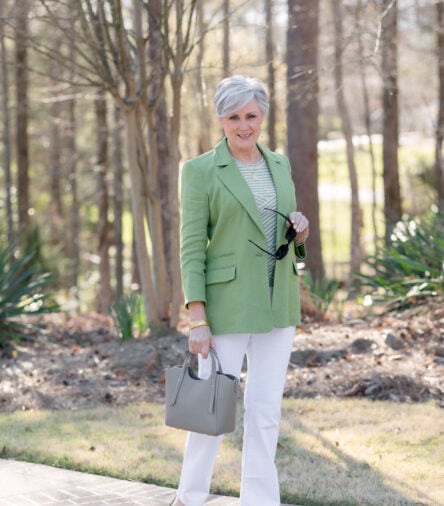
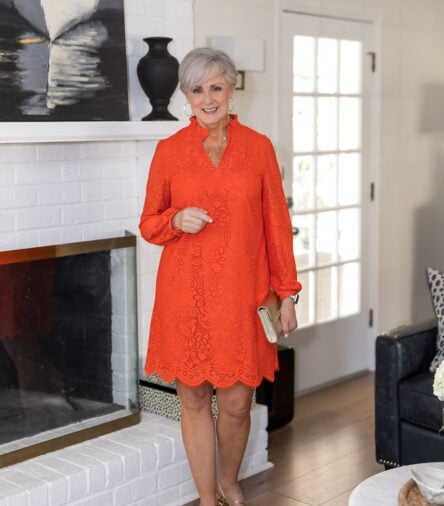








A January wardrobe reset for women over 50 might be the best thing you do for your closet this year. The holiday sparkle has faded, the credit card statements have arrived, and suddenly that “add to cart” finger could use a rest. If you’re ready to shop your closet instead of the sales—consider this your no-buy challenge invitation.
Think of it like Dry January, but for shopping. If you’ve seen No-Spend January floating around, this is the wardrobe version. A chance to step back, take stock, and rediscover what you already own. You might be surprised how good it feels.
I’ve been doing this long enough to know that the most stylish women aren’t the ones with the biggest closets. They’re the ones who actually know their closets. So let’s make January the month you fall back in love with what you already own.
Here’s What You’ll Find in This Post
- The Closet Audit (Without the Overwhelm)
- 5 Ways Women Over 50 Can Shop Their Closet Like It’s New
- The Remix Formula: Creating Fresh Outfits
- What Actually Deserves to Stay
- If You MUST Buy: The Only Exceptions
The Closet Audit (Without the Overwhelm)
Let’s be honest—most of us are wearing about 20% of our closet on repeat while the other 80% sits there judging us. No-Buy January is the perfect time to flip that script.
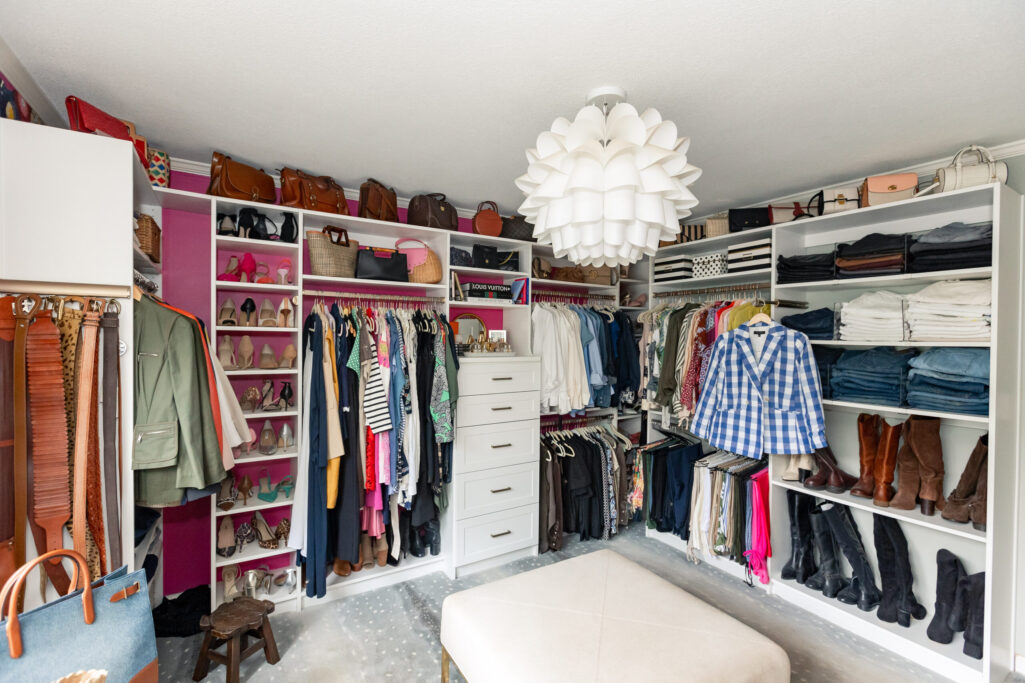
But before you dive in, a little housekeeping: swap out those wire hangers for velvet ones (game changer for keeping things visible and off the floor), corral your scarves and belts into drawer organizers, and give everything some breathing room. A closet that feels like a boutique is a closet you’ll actually want to shop. (Here are my favorite closet organizers on Amazon.)
But I’m not asking you to Marie Kondo your entire wardrobe in a weekend. That’s a recipe for decision fatigue and a pile of “maybe” clothes on your bed for three weeks while you ponder whether they spark joy. Instead, try the 10-Minute Section Method.
The 10-Minute Section Method
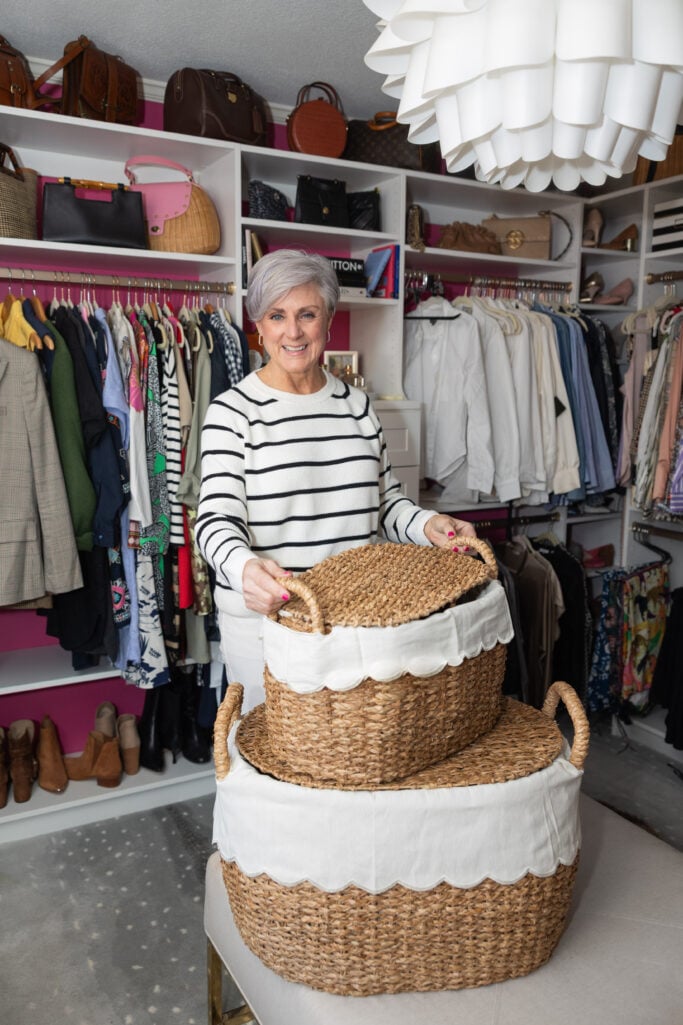
Each morning, spend just 10 minutes on ONE section—blazers Monday, sweaters Tuesday, trousers Wednesday. Pull everything out, try it on, and make three piles: Love It, Fix It, and Thank You Next. By the end of the week, you’ve audited your basics without losing your mind.
Want to see what a shoppable closet actually looks like? Watch Behind Closet Doors on YouTube 🚪

Beth’s Style Tip: Keep a small basket in your closet for the “Fix It” pile—buttons to sew, hems to repair, items for the tailor. One trip to the alterations shop can resurrect five forgotten pieces.

- 1. Necklace Organizer
- 2. Jewelry Box
- 3. Bracelet Stand
- 4. Handbag Stand
- 5. Sunglass Organizer
- 6. Clutch Holder
January Wardrobe Reset Rules (Realistic Version)
- No new clothes, shoes, or accessories for 30 days
- Yes to tailoring/repairs/steaming
- Replace only truly worn-out essentials
- 48-hour pause before any “exception” purchase
1. The Backwards Hanger Trick
Turn all your hangers backwards. When you wear something, hang it back the right way. By February 1st, you’ll see exactly what’s been ignored—and those are the pieces to challenge yourself with this month.
2. Play Dress-Up (Seriously)
Pour yourself a glass of wine, put on some music, and try combinations you’d never normally reach for. Silk blouse under a chunky sweater? Why not. That dress as a tunic over slim trousers? Could be brilliant. Take photos of what works—your phone is your stylist’s notebook.
3. The Third Piece Rule
Every outfit you’d normally wear with two pieces? Add a third. A scarf. A belt. A cardigan tied over the shoulders. A statement necklace. That third piece is often the difference between “getting dressed” and “having style.”
Beth’s Style Tip: I keep a drawer of “elevators”—silk scarves, good belts, interesting brooches. When an outfit feels flat, I shop that drawer first.

4. Rediscover Your Back-of-Closet Pieces
I grew up in a home where the living room was used only when guests arrived, the fine china collected dust in between holidays, and there was always ‘guest soap’ we weren’t allowed to touch. (I used to tease my mom, I’d have to bury her with all that soap.) In my 30s, I decided the guest of honor in my life was going to be me. Now I use all of my beautiful things, all of the time.
Your closet deserves the same philosophy. Those pieces shoved to the side, waiting for the ‘right occasion’? Pull them forward. Sometimes we stop wearing things not because they don’t work, but because we forgot they existed. That printed silk blouse from three years ago might be exactly what your neutral wardrobe needs right now. The occasion is today. Wear the blouse.
5. Cross-Pollinate Your Closet Zones
Your “work” blazer with your “weekend” jeans. Your “evening” silk top with your “casual” chinos. Those Winter Dresses you save for special occasions? Try one with a chunky sweater and boots for Saturday errands. Those artificial categories we create? They’re limiting your options. The pieces don’t know what zone they’re in—only you do.
The Remix Formula: Creating Fresh Outfits
Here’s a simple formula that works every time: Same Base, Different Story.
Take one foundational piece—say, a black turtleneck, classic white shirt, or even your favorite leggings (here’s How to Wear Leggings after 50 if you need inspiration)—and style it three completely different ways. One casual, one polished, one unexpected. Photograph each. You’ve just tripled that piece’s value in your wardrobe without spending a cent.
Example: The Black Turtleneck
Casual: With cuffed jeans, a leather jacket, and pointy-toed boots
Polished: Tucked into a tartan skirt with suede boots and a black satchel
Unexpected: Under a Waxed Barbour jacket with velvet camel jeans and a plaid bucket hat—country weekend, but make it chic
Beth’s Style Tip: If you can’t style a piece at least three ways, it might not deserve closet real estate. This is how I decide what stays and what goes.



What Actually Deserves to Stay
During your audit, some pieces will earn their spot immediately. Others… not so much. (If you’re wondering which basics are worth keeping, I broke down the 5 Wardrobe Staples that Actually Get Worn —the pieces I reach for on repeat.) Here’s my keep-or-release framework:
Keep If:
- It fits your body right now (not the body you’re “going to have”)
- You’ve worn it in the past year (or would if you remembered you owned it)
- It makes you feel confident when you catch your reflection
- It plays well with at least three other pieces you own
Release If:
- You’re keeping it out of guilt (“but it was expensive”)
- It requires a different body, lifestyle, or personality to work
- You reach past it every single time
- The fabric is pilled, faded, or past its prime
Beth’s Style Tip: That expensive piece you never wear? The money is already spent. Keeping it won’t bring it back. Let someone else love it, and free up space for pieces you’ll actually reach for.
And here’s the bonus: those pieces you’re releasing don’t have to go to waste. I sell mine on my Poshmark store—it’s like giving your clothes a second act while putting a little money back in your pocket. (If you’ve never tried it, starting your own Poshmark closet is easier than you think. Snap a few photos, set your price, and let someone else fall in love with what no longer serves you.)
If You MUST Buy: The Only Exceptions
Let’s be real: I’m a style blogger, not a monk. Retail therapy exists for a reason, and I’m not here to tell you shopping is the enemy. But there’s a difference between filling a gap and filling a void. Here’s when I give myself permission to hit ‘add to cart’—even on a no-buy:
- Replacement basics: If your only white tee has a stain and your black pants have a hole, replace them. A wardrobe can’t function without foundations.
- The missing link: If your closet audit reveals you have five gorgeous blouses but nothing to wear with them, a well-chosen pair of trousers isn’t shopping—it’s completing a puzzle.
- Quality upgrades: Trading three mediocre sweaters for one beautiful cashmere isn’t accumulation—it’s curation.
For quality basics that earn their keep, I always look at Quince for cashmere at real-world prices, Talbots for classic trousers and blazers that actually fit our bodies, and Lands’ End for outerwear that lasts. If you must break the no-buy, make it count.
And if you want to browse without buying? Follow my ShopMy storefront. Save what you love now, shop when you’re ready. It’s perfect for a no-buy month—bookmark the pieces that catch your eye, and they’ll be waiting when your closet audit reveals the real gaps.
The Real Gift of a January Wardrobe Reset
Here’s the thing about style after 50: you’ve already done the work. The pieces are there. The taste is there. You just need to reintroduce yourself.
This isn’t about deprivation—it’s about remembering that style has no expiration date. Neither does the wardrobe you’ve spent years building.
So pour yourself a cup of coffee, open those closet doors, and get reacquainted. You might be surprised by what you find.
Drop your favorite closet-shopping discovery in the comments—I’d love to hear what hidden gems you’re rediscovering this month.
If you’re loving this kind of content, membership might be for you. In 2026, members get exclusive access to monthly What to Wear Where guides, Friday Finds videos with early outfit sneak peeks and curated picks, plus Kelly’s Table for the food and lifestyle side of things—all without a single ad. It’s a quieter, more intentional way to enjoy Style at a Certain Age. Join us here.
FAQs: January Wardrobe Reset & Shopping Your Closet
Start by auditing one section at a time—try the 10-minute method where you tackle blazers one day, sweaters the next. Try on everything, create outfit combinations you haven’t worn before, and photograph looks that work so you remember them.
You likely have more options than you realize. Challenge yourself to combine pieces you normally wouldn’t pair, add a “third piece” like a scarf or belt to elevate basics, and pull forward items you’ve forgotten about in the back of your closet.
This is actually an ideal time to edit your wardrobe. If pieces don’t fit, flatter, or coordinate with multiple other items, consider donating them. However, don’t rush—use the month to truly assess what earns closet space.
Focus on accessories you already own, perfect your fit with tailoring, try unexpected combinations, and add a “third piece” to elevate simple outfits. Style is about how you wear things, not how many things you own.
A closet audit reveals what you actually own, what needs repair or tailoring, what can be donated, and what gaps genuinely exist in your wardrobe—making future purchases more intentional and your daily dressing easier.
I keep it simple: replace what’s worn out, fill genuine gaps your closet audit revealed, and upgrade quality when it makes sense. If you’re tempted by something outside those categories, sleep on it. If you’re still thinking about it in a week, it might be worth it.






I think this is my 2nd favorite pist. Second being the recent post about OSCAR passing! Thanks for all the great advice! Thinking of you at this very sad time!
Perfect timing. I’ve been thinking about a 30 day no-buy period but was struggling for how to get started. This is exactly what I needed. Do you recommend any particular way of organizing clothes, i.e., clothing type, season, color? I’ve tried a few different methods and can’t decide what is more efficient. Closet organizing seems to be, for me anyway, a continuous process!
This post hit at the perfect time! I look at my closet and feel overwhelmed, taking it in bites makes such sense. I’m going to start with my sweaters 🙂
Thank you for this post and the excellent advice, plus my hubby will appreciate the Dry January credit card bill.
Thanks for the helpful suggestions. I find it helps me to eliminate unworn items when I follow my “one a day” plan. Each day I try on one thing that I haven’t been wearing but that is appropriate for that season. It only takes a couple of minutes and it makes the task more manageable for me.
I’d love to get your thoughts on ways we can get some additional wear in January/February of those items we buy “for the holidays”. It would be helpful to find out about some options to wear velvet (jackets, pants, tops), sparkles, satin, plaid/tartan, and jewel tones. (I loved the piece you did last year about wearing a red jacket post-December and it was great to see you wearing it with denim in your recent Friday post.)
This is a great idea! The closet wardrobe reset with the 10
minutes a day spent on one type of items in your closet. Like blazer one day, pants the next day, etc. Gives you the chance to really think about the items and weather to keep or give away. Also not purchasing anything for a month unless necessary is a great idea. Gives us breathing room to decide if we really need something or not.
Too late, too many sales to ignore. I’ll try harder in February
I love this post !
I do what I call “wear it or ship it out”. If I put something on that I am not happy with for any reason I immediately put it in my donate basket. But even doing this I really need to go through my closet.
I always dead doing it because it just seems overwhelming. But I will start tomorrow with your suggestion to go through one group a day.
Thank you for a great post filled with terrific suggestions !
This is the most useful post in all the years I’ve been following you. Specific, task-focused, achievable, and timely after all of the holiday spending and shopping.
I took some time to put together eight new-to/me top/blouse + jacket/sweater pairings using items I own but have not worn very often. All of them are now lined up in my closet to wear through January with existing pants/jeans.
Here’s to Dry and No Buy January!
thanks Beth, this is very helpful. I am recently retired and it’s time for a new me. I love classic and retired classic is always in style. I like pops of fun but do those in shoes and a few other accessories, keeping my style classic and elegant.
This is an outstanding post! Best advice I’ve ever had on organizing my closet. I like the idea of turning your hangers around. Thank you so much.