












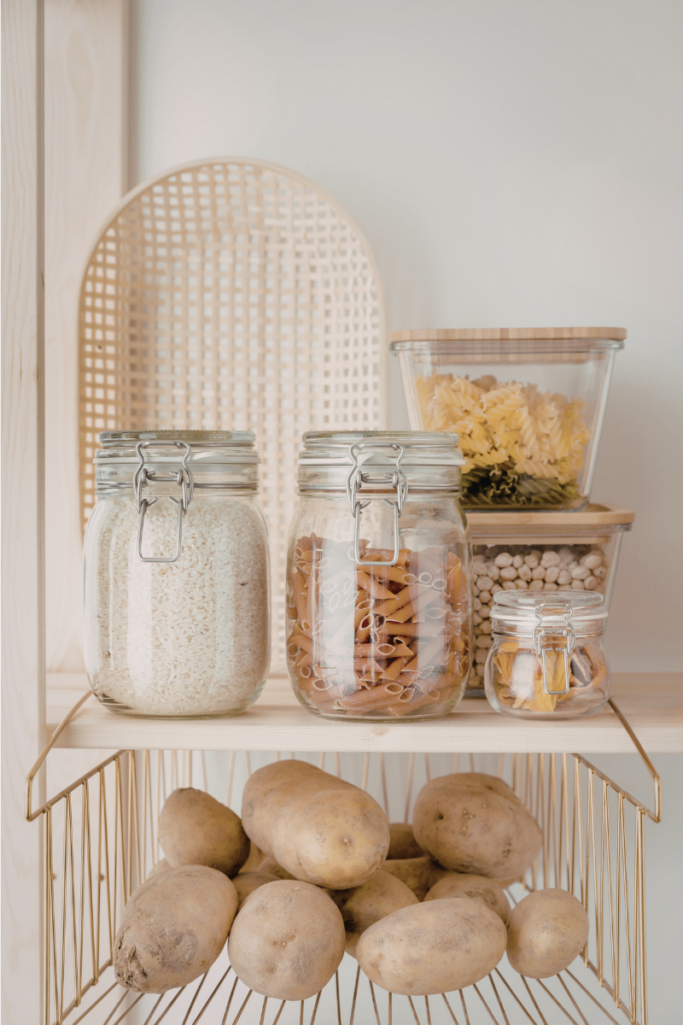
A pantry refresh isn’t about buying everything new—it’s about creating systems that keep food fresh, visible, and accessible. Focus on clear containers, smart labeling, and grouping similar items together for maximum efficiency.
7 Storage Solutions for Your New Year’s Pantry Refresh
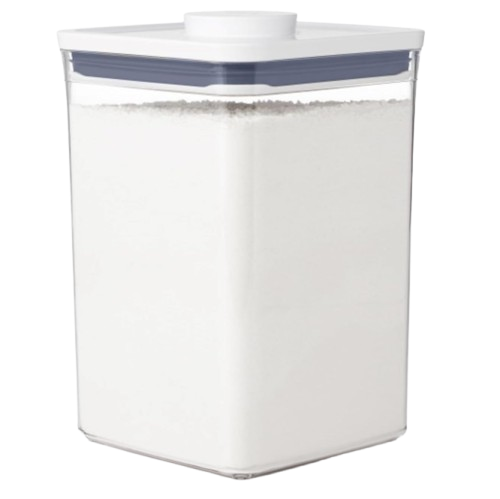
1. Airtight Containers for Dry Goods
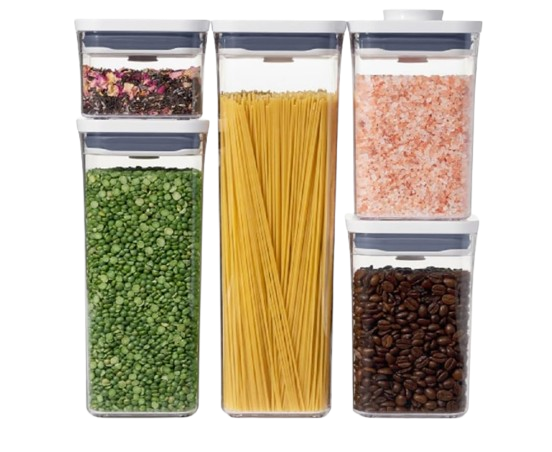
These stackable, airtight containers keep flour, sugar, rice, pasta, and cereal fresh while creating a visually cohesive pantry. The pop-open lids seal with one push and open with one hand—genuinely convenient when you’re mid-recipe with floury hands. The square and rectangular shapes maximize shelf space without wasted gaps, and the clear bodies let you see at a glance what needs restocking.
Sizes to get: Start with the variety set that includes multiple sizes. Use large containers for flour and sugar, medium for pasta and rice, small for nuts and chocolate chips.
Why it matters: Transferring dry goods from their original packaging prevents staleness, pest issues, and that annoying situation where half-empty boxes fall over and spill everywhere.
2. Lazy Susan for Hard-to-Reach Corners
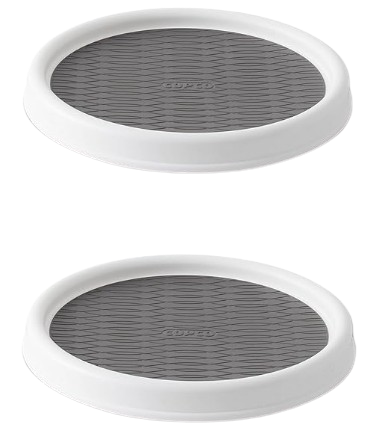
Copco Non-Skid Lazy Susan Turntable
Corner shelves and deep pantry spaces create dead zones where items disappear and expire. A lazy susan solves this by bringing everything to you with one spin. Use it for oils, vinegars, condiments, or spices—anything you need to access regularly but don’t want taking up prime real estate.
Pro tip: Get two—one for oils and vinegars, another for condiments. Group by category so everything has a designated turntable home.
Why it matters: You’ll actually use the items you own instead of buying duplicates because you forgot what was hiding in the back corner.
3. Clear Storage Bins for Categorizing
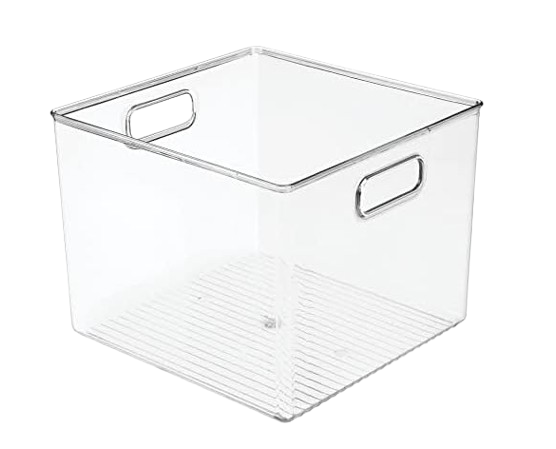
mDesign Plastic Storage Bins with Handles
Create zones in your pantry with clear bins that group similar items—baking supplies, snacks, breakfast items, pasta and grains. The built-in handles make pulling bins down from high shelves easy, and the clear sides mean you can see everything without unpacking.
How to organize: Label each bin with its category. Put frequently used bins at eye level, less common items higher up or lower down. This creates a grocery store effect where everything has a designated section.
Why it matters: When everything has a home, putting groceries away takes minutes instead of shoving items randomly and hoping for the best.
4. Tiered Shelf Organizers for Visibility
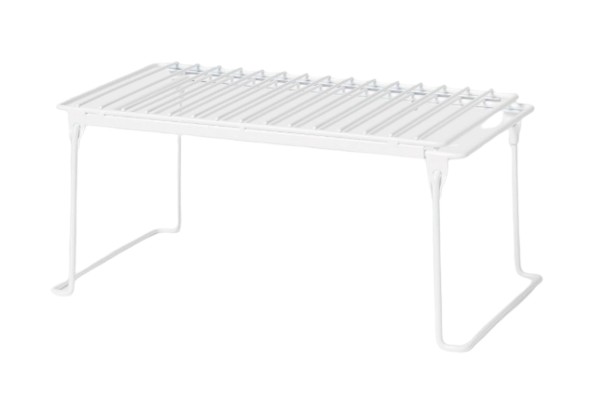
Brightroom Expandable Stackable Cabinet Shelf Organizer
These expandable risers create multiple levels on a single shelf, preventing smaller items from getting lost behind larger ones. Perfect for canned goods, jars, or spice bottles—you can see every item without moving anything.
Smart placement: Use them on deep shelves where items stack behind each other. The tiered design brings back items forward visually so nothing gets forgotten and expires.
Why it matters: You’ll stop buying duplicates of items you already own because you can actually see your entire inventory at a glance.
5. Over-the-Door Organizer for Small Items
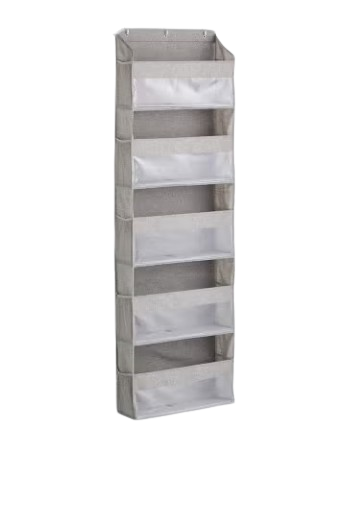
The Container Store Over the Door Pantry Organizer
The back of your pantry door is valuable real estate going unused. An over-the-door organizer with clear pockets holds spice packets, seasoning mixes, snack bars, tea bags—all those small items that create clutter on shelves.
What to store: Anything flat and lightweight. Gravy mixes, taco seasoning, individual oatmeal packets, bouillon cubes, tea bags, hot chocolate packets.
Why it matters: Vertical storage frees up shelf space for larger items while keeping frequently used small packets visible and accessible.
6. Produce Storage Containers for Fresh Items
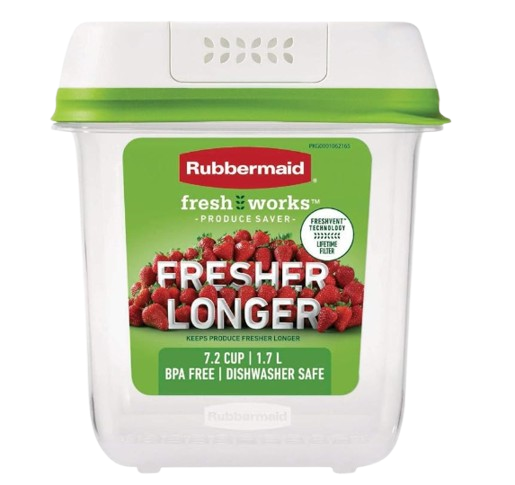
Rubbermaid FreshWorks Produce Saver
If you keep onions, potatoes, or fresh produce in your pantry, these containers extend freshness by regulating airflow and moisture. The elevated crisp tray keeps produce away from moisture, and the filter regulates air flow to reduce spoilage.
Best for: Onions, potatoes, garlic, tomatoes (never refrigerate tomatoes—they lose flavor). Anything you buy in bulk and want to keep fresh longer.
Why it matters: Reducing food waste saves money and makes your pantry refresh actually sustainable beyond January.

7. Label Maker for Everything
Clear containers and bins only work if everyone in your household knows what goes where. A label maker creates uniform, professional-looking labels that make your system maintainable long-term. Label containers, bins, and shelf zones so putting groceries away becomes foolproof.
What to label: Everything. Containers (flour, sugar, pasta), bins (baking supplies, snacks), shelves (breakfast, dinner, canned goods), even lazy susans (oils, condiments).
Why it matters: Labels create accountability. When everything is clearly marked, items end up in their designated spots instead of wherever there’s room, which maintains your organization system indefinitely.
Why a Pantry Refresh Matters More Than You Think
An organized pantry isn’t about aesthetics (though that’s a nice bonus)—it’s about reducing food waste, saving money, and making cooking less stressful. When you can see what you have, you stop buying duplicates. When everything has a home, putting groceries away takes minutes instead of creating chaos. When your pantry is organized, meal planning becomes easier because you actually know what ingredients are available. A January pantry refresh sets you up for a full year of easier cooking, less waste, and a kitchen that functions instead of frustrates.
Mini Formula: The Weekend Pantry Refresh Plan
Step 1: Empty and Assess (Saturday Morning, 1 hour)
Remove everything from your pantry. Check expiration dates. Toss expired items. Group remaining items by category (baking, pasta, canned goods, snacks, breakfast).
Step 2: Clean and Measure (Saturday Afternoon, 30 minutes)
Wipe down all shelves. Measure your shelf depths and heights to ensure storage solutions will fit before ordering.
Step 3: Install Storage Solutions (Sunday Morning, 1 hour)
Add shelf risers, lazy susans, and bins. Create zones for each category. Place frequently used items at eye level.
Step 4: Decant and Label (Sunday Afternoon, 1-2 hours)
Transfer dry goods to airtight containers. Label everything clearly. Put items back in their designated zones.
Step 5: Maintain the System (Ongoing)
When you put groceries away, return items to their labeled homes. Do a quick 15-minute pantry reset monthly to catch any drift.
Mini FAQ
Do I really need to transfer everything to containers or can I keep original packaging?
Original packaging works fine for some items (canned goods, unopened boxes), but dry goods like flour, sugar, rice, and pasta stay fresher and take up less space in airtight containers. Plus, uniform containers look better and stack more efficiently. Start with the items you use most frequently—you don’t have to containerize everything at once.
How do I keep my pantry organized long-term?
Labels and zones are key. When everything has a designated spot and it’s clearly marked, maintaining the system becomes automatic. Also, do a 15-minute pantry reset monthly—pull everything forward, check for expired items, and return anything that drifted to its proper home. Small maintenance prevents total reorganization later.
What’s the best way to organize a small pantry?
Maximize vertical space with shelf risers and over-the-door organizers. Use the backs of doors, add hooks for reusable bags, and invest in stackable containers that make the most of limited square footage. Group items by meal type (breakfast, lunch, dinner) rather than by food category if you’re very tight on space—this speeds up meal prep in small kitchens.
Should I buy all the storage solutions at once or gradually?
Start with the basics—a set of airtight containers for dry goods, one or two bins for categorizing, and a lazy susan for corners. See how they work in your space and add more as needed. You might discover you need different sizes or quantities than you initially thought. It’s better to build your system gradually than buy everything at once and realize it doesn’t fit your actual pantry dimensions.
✨ Beth’s Take: Why I Finally Stopped Ignoring My Pantry
For years, my pantry was that thing I opened, grabbed what I needed (usually from the front), and closed quickly before anything fell out. I’d buy duplicates of items I already owned because I couldn’t see what was buried in the back. Spices expired before I used them. Flour bags tipped over and spilled. It was functional in the loosest sense of the word, but it wasn’t working for me.
Last January, I spent one weekend doing a complete pantry refresh. I bought OXO containers for all my baking staples, clear bins to categorize by type, a lazy susan for my corner shelf, and a label maker. The transformation was immediate and dramatic—but more importantly, it lasted.
A year later, my pantry still looks organized because the system actually works. Everything has a home. Labels mean my husband knows where things go when he puts groceries away. I can see at a glance what we have and what we need. I’ve stopped buying duplicate cans of tomatoes because I can see all six hiding in the back. And honestly? Cooking feels less chaotic when I’m not pawing through messy shelves trying to find ingredients.
The upfront investment—time and money—paid for itself within months through reduced food waste and fewer duplicate purchases. This wasn’t a Pinterest fantasy that looked good for a week then collapsed. This was a functional system that made daily life genuinely easier.
Beyond the Pantry
If you’re tackling other areas of your kitchen beyond the pantry, check out Amazon Kitchen Tools That Make Cooking a Breeze for the gadgets that earn their drawer space. And for meal prep storage solutions that work with your newly organized pantry, browse Transform Your Kitchen Routine: Fall Meal Prep Containers That Make Life Easier.


Beyond the Kitchen
My posts on The Amazon Storage Finds Everyone Needs Before the Holiday Chaos Hits and 7 Stylish Storage Solutions That Will Transform Your Home Organization cover everything from closets to living rooms with the same practical, sustainable approach that makes systems actually stick.
Closing Thoughts
Refresh Your Pantry
A New Year’s pantry refresh isn’t about perfection or Pinterest-worthy photos—it’s about creating a system that reduces waste, saves money, and makes cooking less stressful all year long. Start with these seven storage solutions and adjust based on your actual space and cooking habits. The goal is function that lasts, not just organization that looks good for a week.






My pantry is a disaster! Thanks for these great tips!