










The right baking tools don’t make you a better baker—they prevent the common mistakes that make baking frustrating. A kitchen scale ensures accuracy, light-colored pans prevent burning, an instant-read thermometer eliminates guessing. These aren’t for experts; they’re for people who want baking to actually work instead of being a gamble.
What You’ll Find in This Post:
The Baking Essentials That Actually Matter
Measuring Tools: Because Baking Is Chemistry
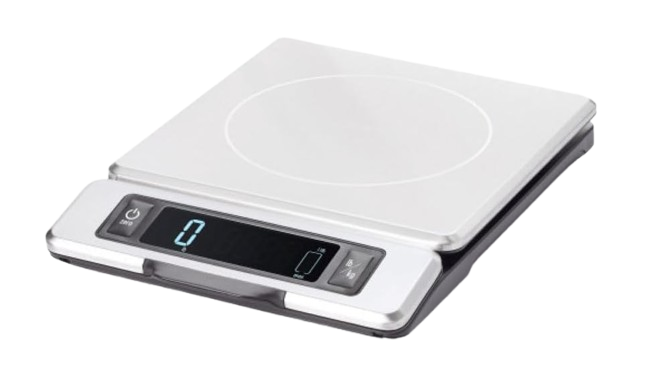
OXO Good Grips Stainless Steel Food Scale
A cup of flour can weigh anywhere from 120 to 150 grams depending on how you scoop it, and that 25% difference is why your cookies spread too much or your cake is dense. A kitchen scale eliminates the guesswork—125 grams of flour is always 125 grams. The tare function lets you add ingredients directly to your mixing bowl, zero it out between additions, and skip the measuring cup cleanup entirely. This single tool will improve your baking more than any technique change.
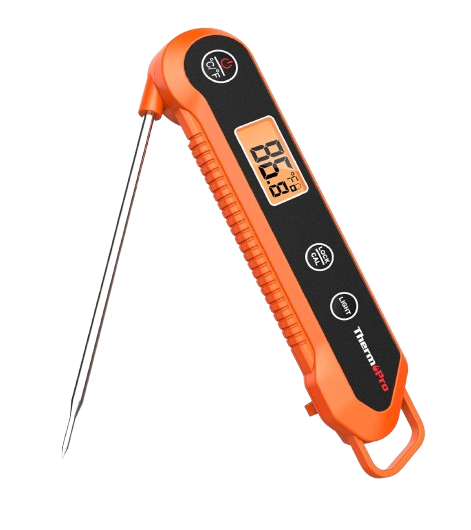
ThermoPro Digital Instant-Read Thermometer
Stop guessing if your bread is done or cutting into cakes to check doneness. This instant-read thermometer tells you the internal temperature in 2-3 seconds—bread is done at 190-200°F, cakes at 200-210°F, custards at 170-175°F. No more overbaked edges and raw centers, no more toothpick tests that don’t actually tell you anything useful. It’s the difference between hoping your bake is done and knowing it is.
Bakeware: The Pans That Prevent Disasters
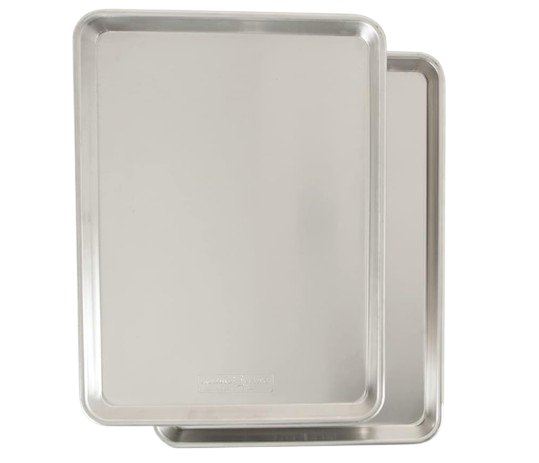
Nordic Ware Naturals Baker’s Half Sheet (2-Pack)
Light-colored aluminum pans bake evenly and don’t burn the bottoms of your cookies like dark nonstick pans do. This half sheet (18×13 inches) is the workhorse size—cookies, sheet cakes, roasted vegetables, everything. The rimmed edges contain spills, the aluminum conducts heat perfectly, and it’s commercial-grade quality that will last decades. Buy two so you always have a clean one ready, and skip the dark nonstick pans that guarantee burned bottoms.
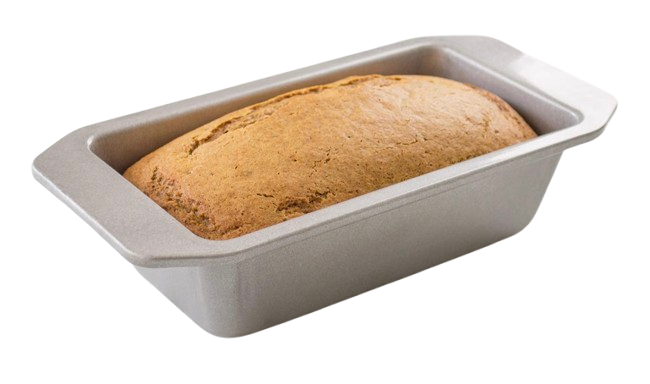
USA Pan Bakeware Aluminized Steel Loaf Pan
This is the loaf pan that actually releases your banana bread and pound cakes without half of it sticking to the bottom. The corrugated surface and light aluminized steel promote even baking and easy release, and the 8.5×4.5-inch size is the standard for most recipes. Heavy enough to conduct heat well but not so heavy that it’s cumbersome, and the fluted sides add structure that prevents warping. This is the pan that makes you look like you know what you’re doing when you unmold a perfect loaf.
Small Tools That Make the Difference
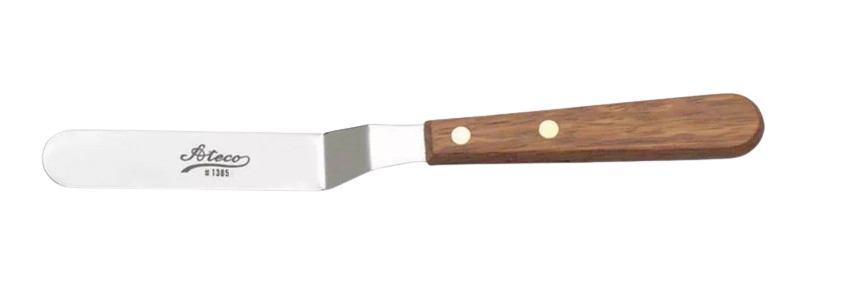
An offset spatula has a bent blade that keeps your knuckles out of the frosting while you spread, making it infinitely easier to frost cakes, spread batter evenly, or lift cookies off pans without breaking them. The small one (4.5-inch blade) handles cupcakes and detail work, a large one (9-inch blade) tackles full cakes and spreading batter in pans. These are the tools that make your finished bakes look professional instead of like a kindergartener decorated them, and they’re genuinely life-changing once you use them.
Silpat Silicone Baking Mat (Half Sheet Size)
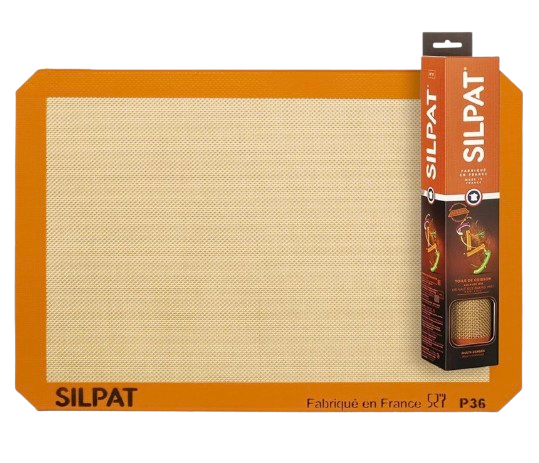
This reusable silicone mat eliminates parchment paper waste and provides a perfectly nonstick surface for cookies, pastries, and candy-making. Cookies bake evenly without burning on the bottom, cleanup is a simple rinse under water, and one mat lasts for years of regular use. The fiberglass-reinforced silicone withstands temperatures up to 480°F, lies completely flat (no curling like parchment), and the half-sheet size fits your Nordic Ware pan perfectly. It’s one of those tools you don’t realize you need until you use it, then you wonder how you ever baked without it.
Why These Six Picks Specifically
They prevent the most common baking failures:
Inaccurate measuring (scale fixes it), burned bottoms (light pans fix it), not knowing when things are done (thermometer fixes it), stuck loaves (good pan fixes it), messy frosting (offset spatula fixes it), cookies stuck to pan (silicone mat fixes it).
They work for non-bakers:
You don’t need technique or experience—these tools do the work for you. A scale measures accurately even if you don’t know proper scooping technique. A thermometer tells you doneness even if you can’t judge by look or feel.
They’re not trendy gadgets:
These are professional-grade basics that actual bakers use. No gimmicks, no single-use tools, just the essentials that make baking work reliably.
What You Don’t Actually Need
Specialty cake pans in every shape:
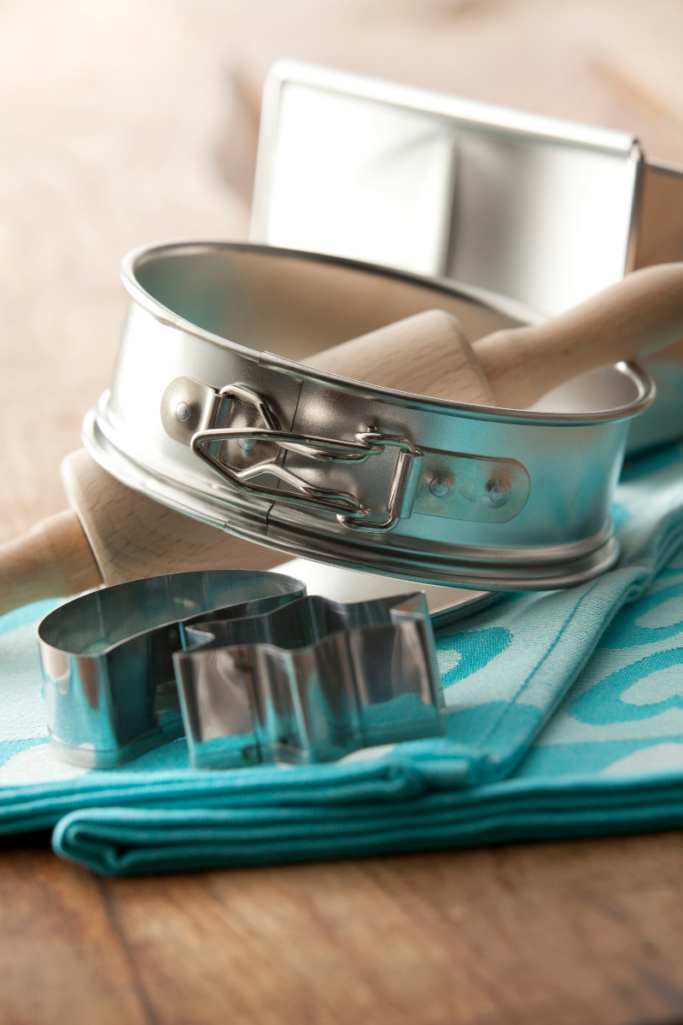
The half sheet and loaf pan cover 90% of baking needs. Springform pans and tart pans are nice if you make cheesecakes or tarts regularly, but start with the basics first.
12-piece measuring cup and spoon sets:
You’ll use the 1-cup, 1/2-cup, 1-tablespoon, and 1-teaspoon measures. The rest gather dust. Buy a quality small set or just use the scale.
Fancy stand mixer (initially):
Hand mixers work fine for most recipes. Save the KitchenAid for when you’re baking regularly enough to justify the counter space and cost.
Decorating tips and bags:
Unless you’re decorating cakes regularly, these are aspirational purchases that sit unused. Master the basics first.
How These Tools Actually Help Non-Bakers
They remove guesswork:
The scale tells you exactly how much, the thermometer tells you exactly when it’s done. No more “does this look right?” anxiety.
They prevent common mistakes:
Light pans prevent burning, good loaf pans prevent sticking, offset spatulas prevent frosting disasters. The tools compensate for lack of experience.
They make results consistent:
Baking the same recipe twice should yield the same results. These tools ensure that happens instead of the random success-or-failure experience most non-bakers have.
They build confidence:
When your bakes turn out well consistently, you’re more likely to try again. Success breeds more baking, which builds actual skill over time.
Mini FAQ
You can, but you’ll get inconsistent results and wonder why baking is so frustrating. These tools solve the problems that make baking feel like a gamble.
Yes. Even careful measuring varies by 20-30%. Baking is chemistry—that variance matters. The scale eliminates it entirely.
Then you especially need these tools. Infrequent baking means you haven’t built intuition or muscle memory. These tools work even when you haven’t touched a mixing bowl in months.
Not necessarily. The OXO scale and Nordic Ware pans are mid-priced and excellent. You don’t need the most expensive, but skip the cheapest—it won’t work well and you’ll replace it anyway.
The kitchen scale. Accurate measuring fixes so many baking problems that people assume are technique issues.
✨ Beth’s Take: The Tools That Made Baking Work
I’m not a baker—I cook frequently, but baking always feels finicky and unpredictable. Cookies would spread too much or not enough. Cakes would be dense or dry. I’d follow recipes exactly and get different results every time, so I mostly avoided baking and bought things instead.
Then I bought a kitchen scale for a specific bread recipe, and suddenly that bread worked every single time. I realized the problem wasn’t the recipes or my technique—it was my inconsistent measuring. A “cup” of flour varied by 30 grams depending on how I scooped it, and that variance was sabotaging everything.
Adding the light-colored sheet pan fixed my burned cookie bottoms (I’d been using dark nonstick pans that conducted heat too aggressively). The instant-read thermometer meant I stopped cutting into cakes to check doneness and ruining the presentation. The offset spatula made me look competent when frosting instead of like I’d spread it with a butter knife. These aren’t expensive specialty tools—they’re basics that professional bakers use because they work. Now when I bake, it actually turns out well, and people assume I know what I’m doing. I don’t—I just have the right tools.
More Kitchen Wins
For more kitchen tool upgrades beyond baking, check out The 3 Kitchen Tools You Need to Upgrade Now! for cookware that transforms everyday cooking. And for appliances that make cooking easier, browse 5 Kitchen Appliances I Thought Were Gimmicks (Until I Actually Used Them!)—the Instant Pot pairs beautifully with good baking tools for complete kitchen capability.
Closing Thoughts
Bake Like a Pro
The right baking essentials prevent common mistakes and make results consistent—a kitchen scale ensures accuracy, light-colored pans prevent burning, an instant-read thermometer eliminates guessing, quality loaf pans release cleanly, offset spatulas create professional-looking finishes, and silicone mats provide perfect nonstick surfaces. Start with the scale and sheet pan (biggest impact), add tools as you bake more. These aren’t for expert bakers—they’re for people who want baking to work reliably instead of being a frustrating gamble.