
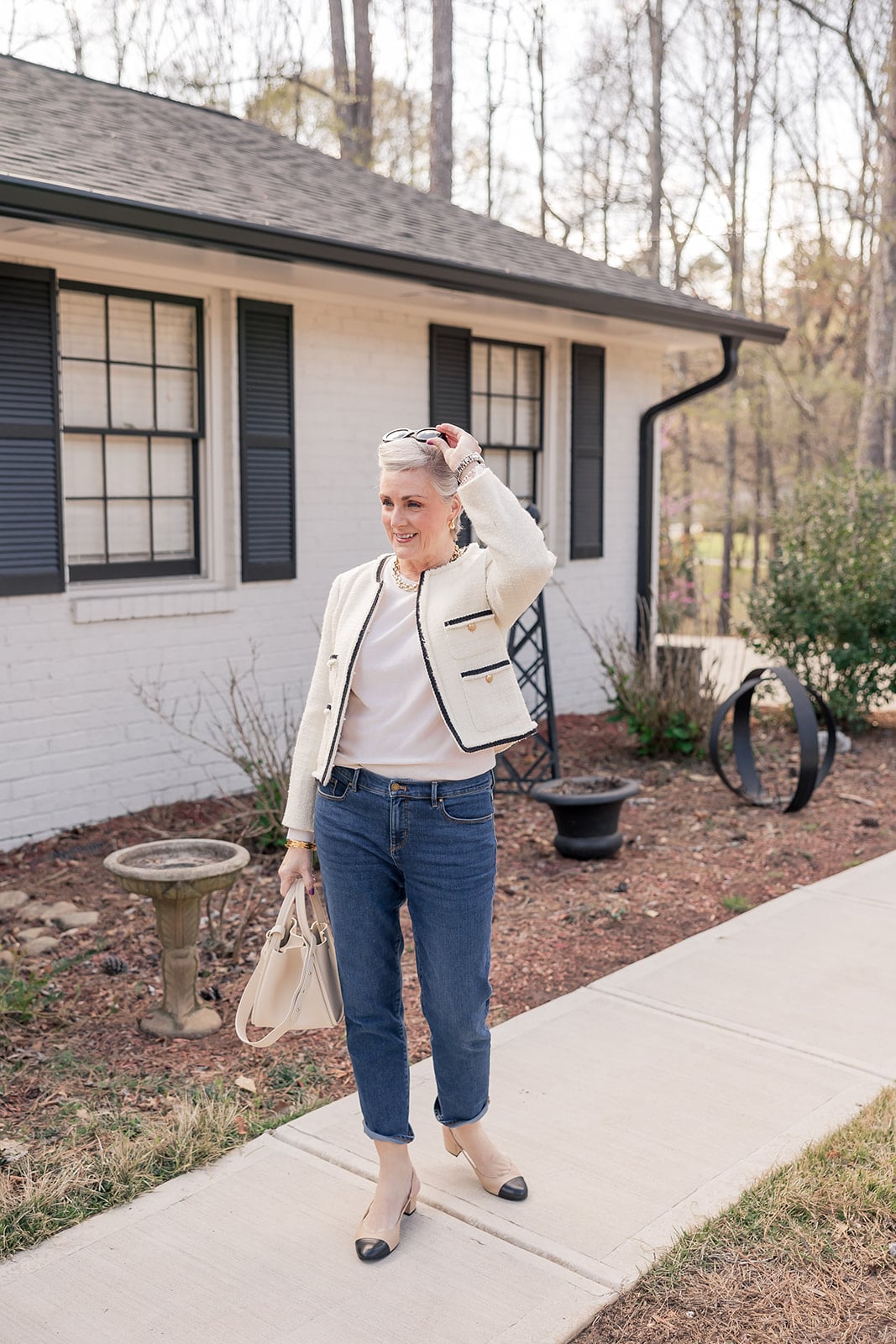

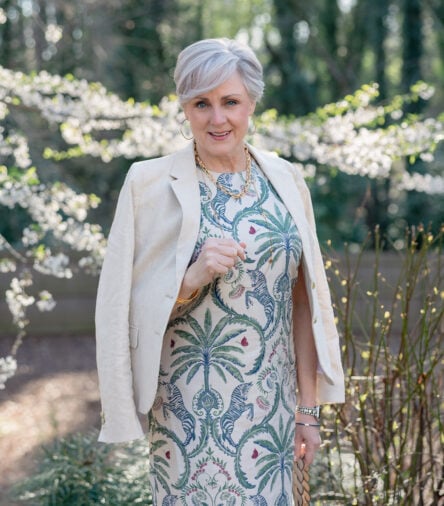
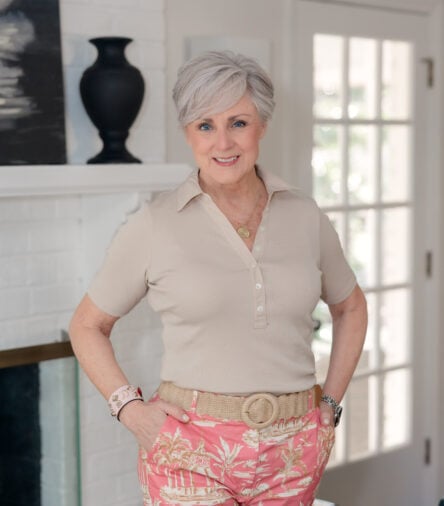




Here’s a formula I keep coming back to every spring: start with one color, and stay there.
Not matchy-matchy. Not boring. I’m talking about tonal dressing — building a look within one color family by mixing shades, textures, and sometimes patterns that all speak the same language. It’s one of the most effortlessly chic things you can do.
The secret starting point? Your denim. Whatever wash you reach for most — light, medium, or dark — that’s your tonal foundation. Build up from there with pieces in the same color family, and suddenly getting dressed feels less like a puzzle and more like a formula.
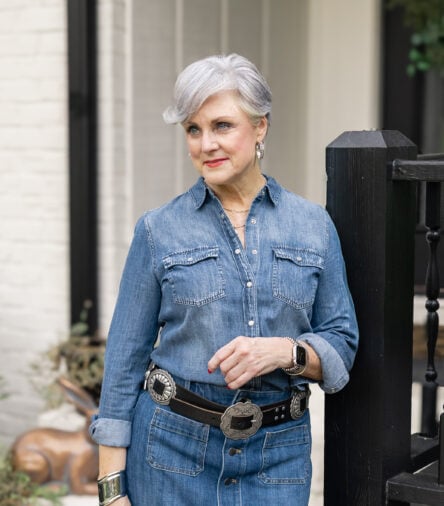
Today I’m showing you how it works across two color families: the blue edit and the cream and white edit. Some of these looks are fully committed tonally — every piece in the same color conversation. Others use a contrasting jacket or cardigan as an outer layer, which is a great way to see the tonal base before you build on it. And one look goes full denim-on-denim-on-denim (one of my personal favorites!). You’ll see it and understand immediately.
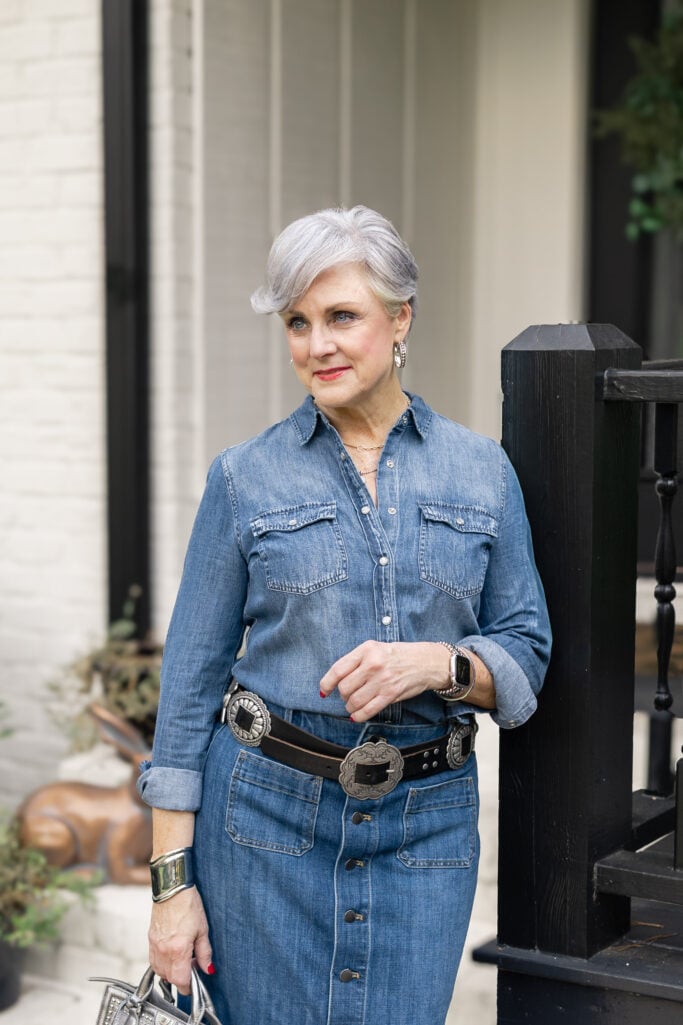
Shop Beth’s Cover Image: Denim Shirt | Denim Midi Skirt | Jax Small Tote | Silver Conch Belt | Silver Cuff | Silver Hoop Earrings
What You’ll Find in Today’s Post
✨ Beth’s Style Tip: The Tonal Formula
The formula is simpler than it sounds: start with a monochromatic base, then let pattern and texture join the conversation — as long as they’re speaking the same color language. A printed pant in the same blue family as your sweater? That’s tonal. A textured cream cardigan over a cream tank? That’s tonal. You’re not trying to match. You’re trying to harmonize.
The Blue Edit
Outfit 1: The Denim-on-Denim Formula
This is the tonal formula fully executed — and it’s one of my favorite ways to wear the Tonal Formula because it’s so easy! Three shades of blue. Two textures. One pattern. All completely in conversation with each other.
A quilted denim jacket with a white floral print layers over a chambray ruffle shirt, which layers over medium-wash kick flare jeans. Light over medium over medium — each piece a slightly different shade, a slightly different texture, and the printed jacket introduces pattern without ever leaving the blue family. That’s exactly the point.
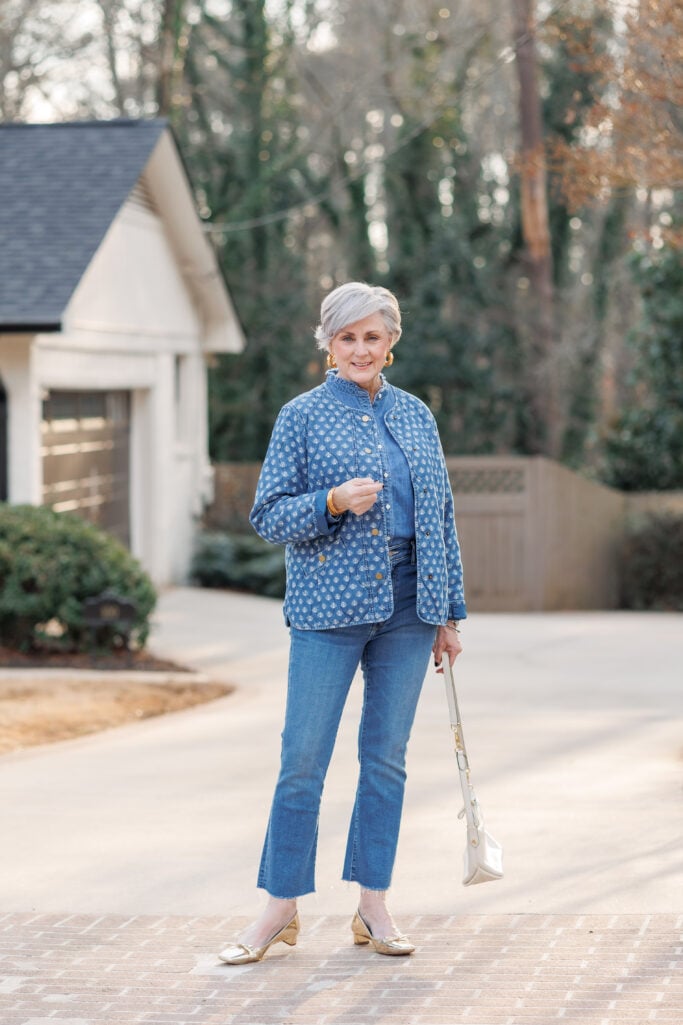
The gold shoes and white bag are the intentional clean accent. When you’re this committed to a color story, a little metallic and a crisp white become the punctuation mark that makes the whole thing land.
✨ Beth’s Style Tip: Denim-on-denim works great when the shades are close but not identical. So don’t worry if your denim washes don’t match exactly. A light chambray over medium jeans, or a dark denim jacket over medium denim — that variation is what makes it look deliberate.
Outfit 2: Navy Tonal with Pattern
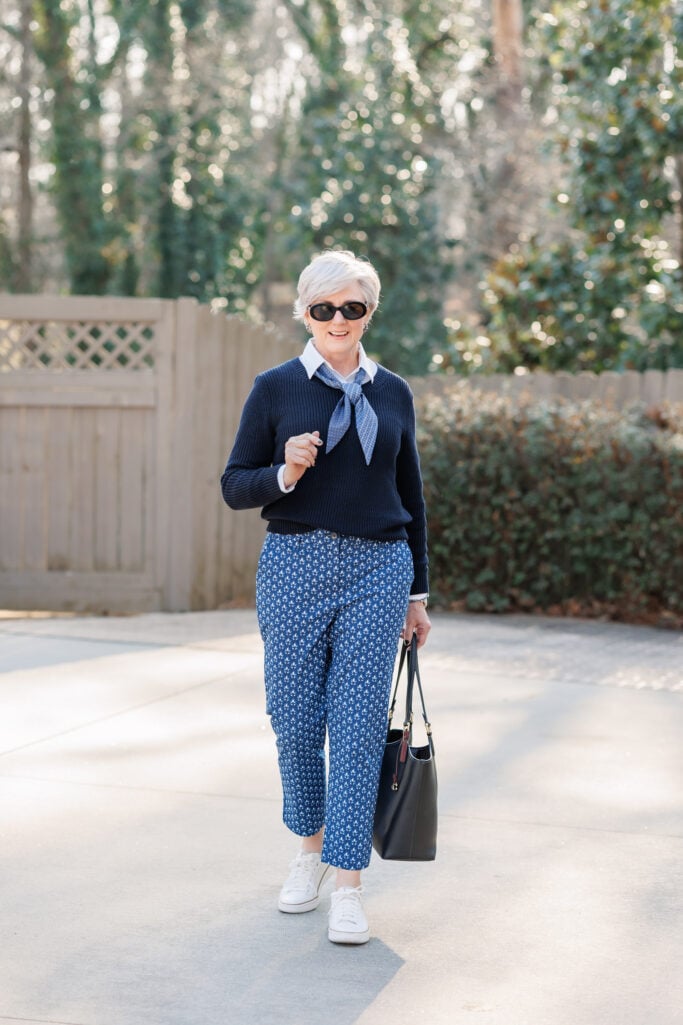
Navy ribbed sweater. Blue printed pants. A soft blue neckerchief tied at the collar. White shirt peeking underneath. White sneakers grounding it all.
This is tonal dressing with pattern woven in — and it’s a great illustration of how staying in one color family doesn’t mean staying boring. The printed pants introduce visual interest, but because they’re in the same blue family as the sweater and scarf, the whole look holds together. The white shirt collar and sneakers are the clean accent — not a color departure, just a breath of air.
Shop Beth’s Look
Outfit 3: The Tonal Navy Base
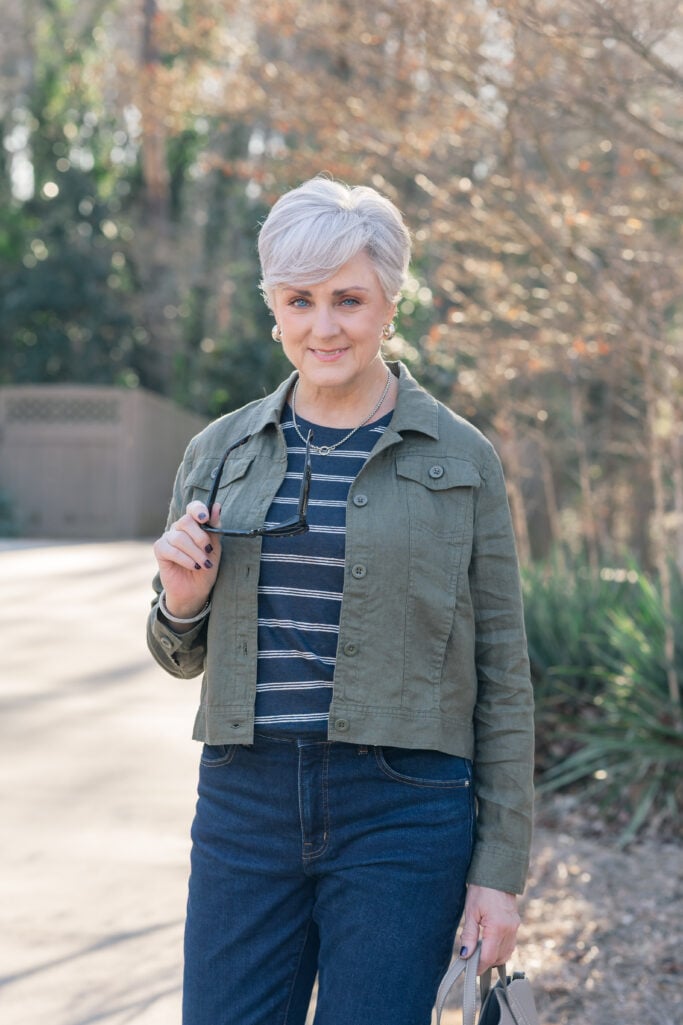
A navy stripe tee with dark rinse denim is your monochromatic navy foundation — clean, simple, and completely wearable on its own. Add the olive linen jacket, and you’ve introduced a contrast color, which means you’ve departed from tonal. That’s fine — it’s a beautiful outfit either way. But strip it back to just the stripe tee and dark denim, and you’ll see exactly what a tonal blue base looks like before you build on it.
Shop Beth’s Look
Outfit 4: Navy Tonal Base
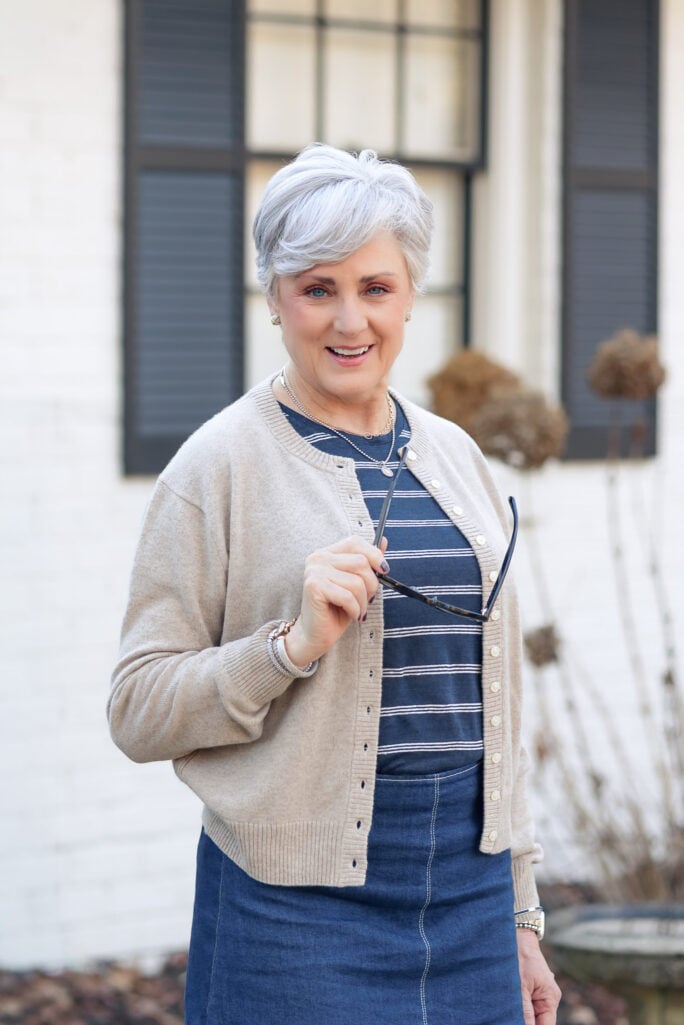
The same principle applies here. Navy stripe tee. Denim skirt. That’s your tonal blue base — the shirt and skirt are different weights and textures, but they’re firmly in the same blue conversation. Add the oatmeal cardigan, and the look shifts to something softer and more layered, but the tonal foundation underneath is doing all the work.
It’s worth noting: when you understand your tonal base, you can choose whether to stay in it or layer out of it depending on the occasion. The outfit is versatile because the foundation is solid.
Shop Beth’s Look
The Cream + White Edit
Outfit 5: Cream and Taupe — Texture as the Star
When you’re working in a cream and white palette, texture becomes your best friend. Color isn’t doing the differentiating work here — fabric is.
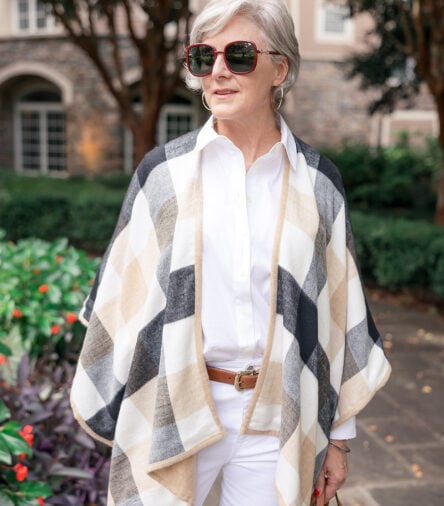
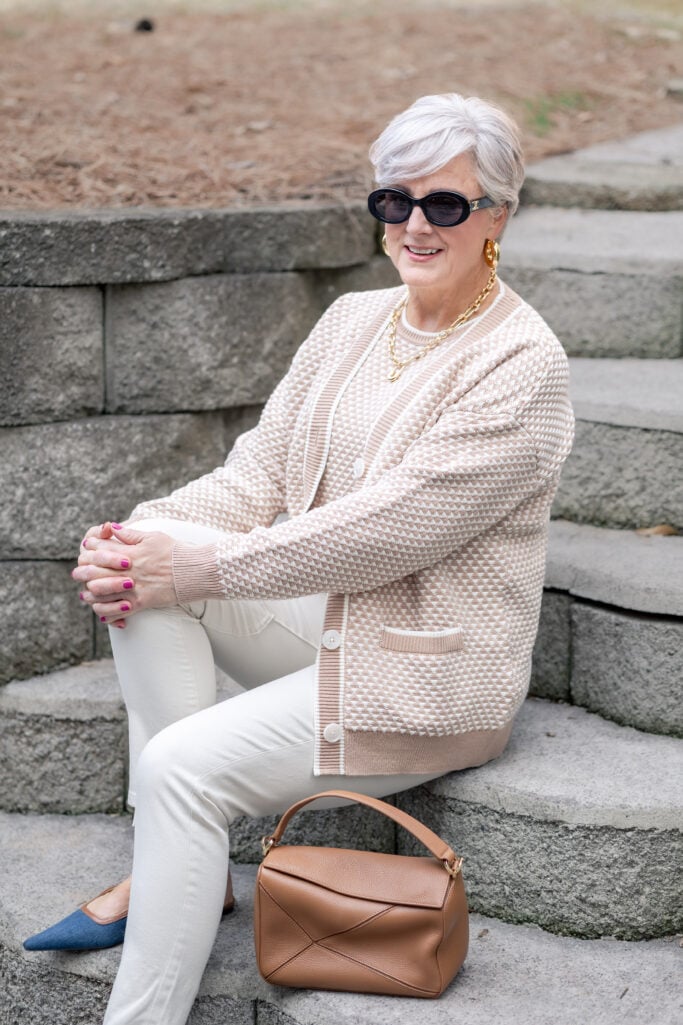
A textured basket-weave cardigan in taupe and cream layers over a cream knit tank, then settles over white ankle jeans. Three pieces, all in the cream-to-taupe family, but each one has a completely different feel — the chunky texture of the cardigan, the smooth flatness of the tank, the clean structure of the denim. That’s what keeps the eye moving and the outfit interesting.
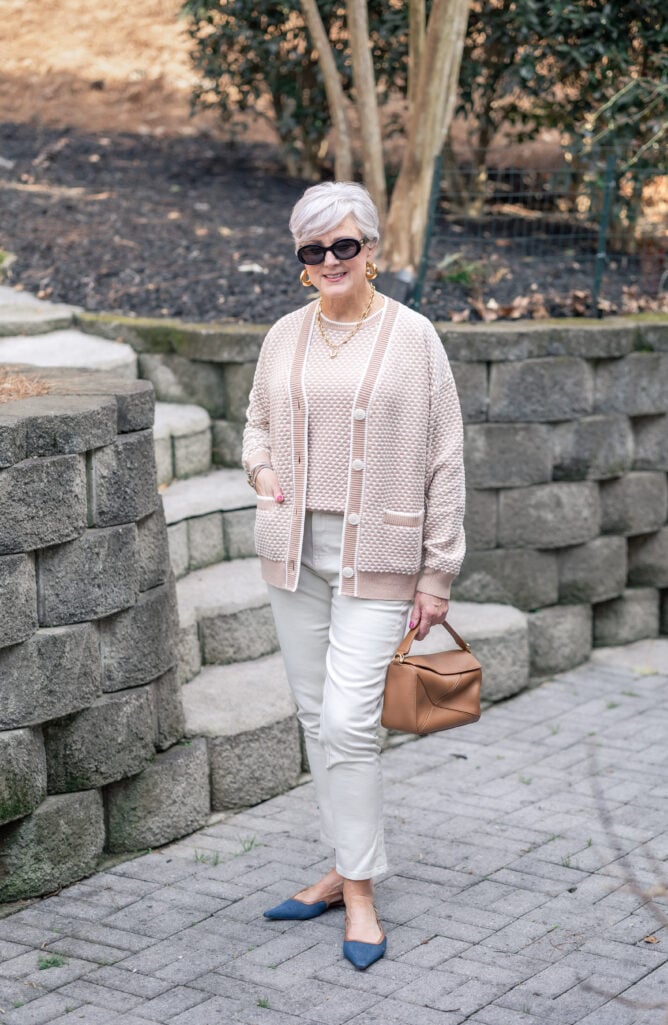
The cognac bag introduces a warm contrast that feels natural rather than jarring, like it grew from the same palette. The navy flats are the one departure, and they work as a grounding accent without competing.
✨ Beth’s Style Tip: When you’re dressing in one neutral palette, add your interest through texture — a chunky knit, a smooth silk, a linen weave. The tonal variations in the same color keep it from feeling flat. Gold jewelry is always the finishing touch that warms it up.
Outfit 6: All White — The Simplest Tonal Statement
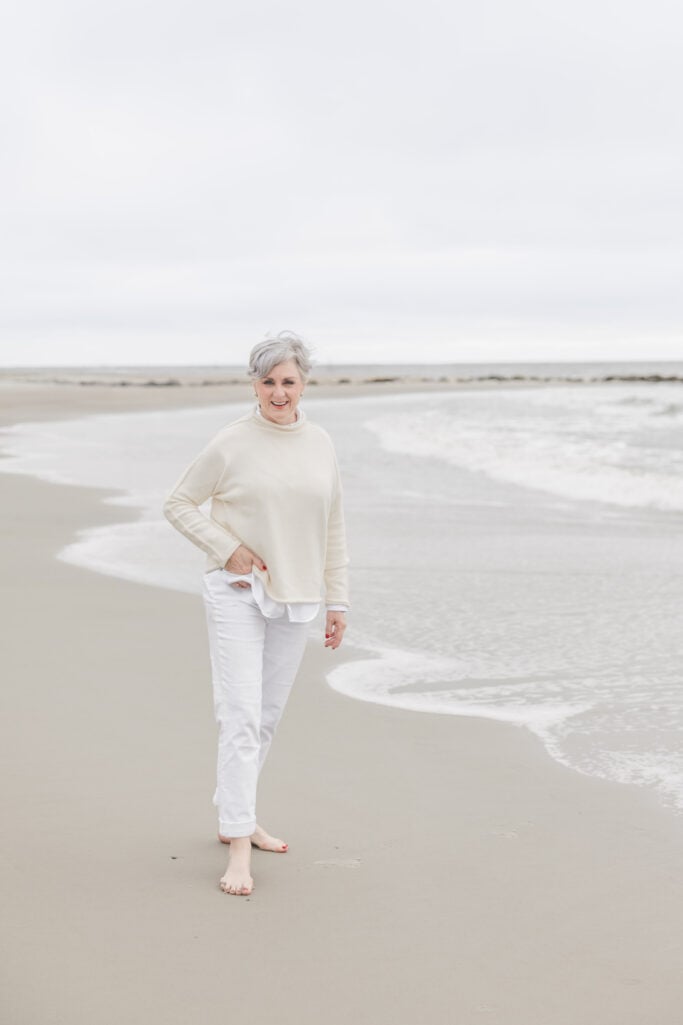
Sometimes the most powerful tonal look is the most stripped-down one.
An ivory cotton rollneck over a white shirt, with white straight-leg jeans. Two whites — slightly different in tone, slightly different in weight. It’s calm. It’s intentional. And it proves that sometimes all-white isn’t stark or cold — it’s warm, effortless, and completely the point.
This is tonal dressing at its most elemental: one color, different shades, nothing competing, everything cohesive.
Shop Beth’s Look
Outfit 7: The Two-in-One Tonal Look
A cropped denim jacket layered over a cream lace tank with kick flare pants in the same soft ivory, tan bit mules, and a neutral Coach bag. The jacket is the blue element, and everything underneath is firmly in the cream and white family. Wear it together, and you’ve got a relaxed blue-and-cream tonal story. Lose the jacket as the day warms up, and suddenly you have a clean head-to-toe cream look that stands completely on its own.
That’s the spring dressing formula in real life — one outfit, two ways, zero overthinking.
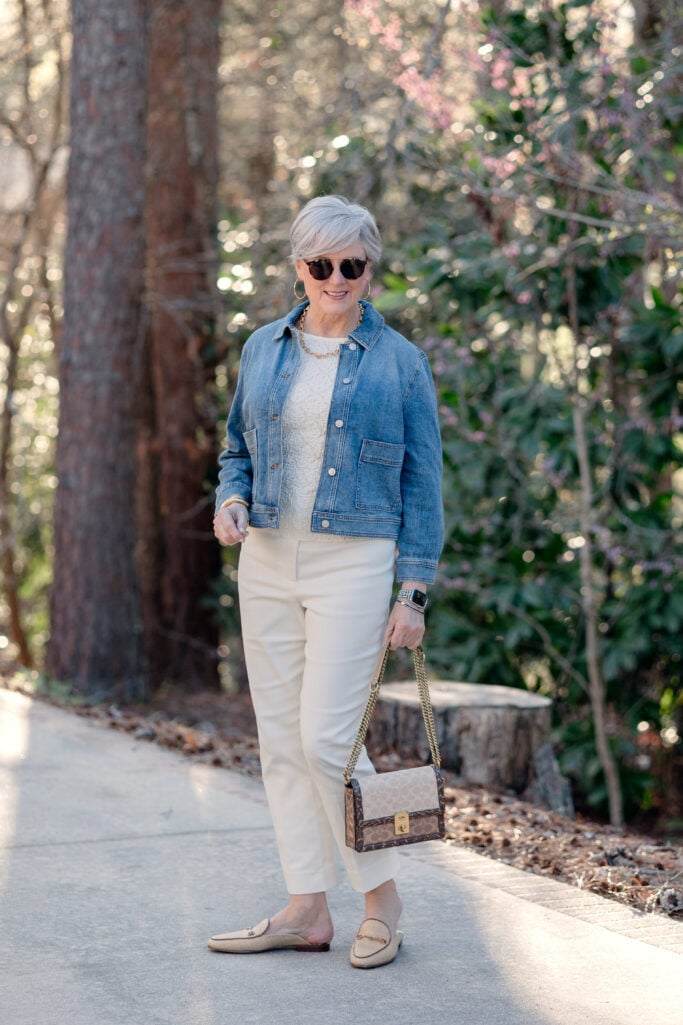
The lace tank adds texture to what could be a very simple neutral base, and the gold accessories — hoops, bracelet, chain necklace — warm the whole thing up without introducing a competing color. This is the outfit you reach for on a spring Saturday when you don’t know exactly where the day is taking you.
✨ Beth’s Style Tip: A denim jacket is one of the most versatile tonal tools you own. Wear it over a cream or white base, and it adds just enough contrast to feel intentional. Take it off, and your tonal outfit is already dressed and ready underneath.
FAQS – Tonal Dressing Over 50
Tonal dressing means building an outfit within one color family — but not matching exactly. You’re layering different shades, textures, and even patterns that all speak the same color language. Monochromatic is the foundation; tonal dressing is what happens when you add depth and interest to that foundation.
Absolutely — and it’s one of the easiest ways to start. A light wash denim pairs beautifully with white and cream. Medium wash works with soft blues, chambray, and indigo prints. Dark wash denim anchors a rich navy look. Start with the wash you already own and build up from there.
It’s one of the most flattering approaches at any age. A head-to-toe color story creates one long, uninterrupted line that’s incredibly elongating and polished. It reads as intentional and sophisticated without requiring a lot of effort or pieces.
Keep the pattern within the same color family. A blue printed pant with a navy sweater works because both are speaking blue. A cream textured cardigan over a cream tank works because the pattern is tonal, not contrasting. The key is staying in the same color conversation — just with a different voice.
For most women over 50, blue is the most accessible entry point because you likely already own multiple shades — dark wash jeans, chambray, navy knits. The cream and white family is equally forgiving and incredibly fresh for spring. Start with what’s already in your closet.
Not exactly — but they should either stay in the color family or act as a clean, intentional accent. Gold jewelry warms up every tonal palette beautifully. A white or cream bag reads as a natural clean break. What you want to avoid is introducing a completely unrelated color that pulls the eye away from the overall effect.
Video: Spring’s Best Accessories
3 Spring Accessories That Make Every Outfit Look Expensive
Ready to refresh your wardrobe for spring? In this video, I’m sharing three must-have spring accessories that instantly elevate your outfits and bring a polished, timeless look to your style. These classic pieces add elegance, sophistication, and versatility to any wardrobe — perfect for women who love effortless, chic style at any age.
Whether you’re building a capsule wardrobe or simply updating your seasonal style, these accessories will help you look refined, confident, and effortlessly put together this spring.

More Spring Inspiration From the Blog
- Easter Dresses For Women Over 50: Dressed with Intention
- Fashion Mistakes That Women Over 50 Make That Age Them – And How to Fix Them
- Spring Maxi Dresses For Petites: 3 Styles That Actually Work
- The Spring Reset: 7 Small Habits That’ll Change How You Feel This Season
Closing Thoughts on Tonal Dressing Over 50
The tonal dressing formula isn’t complicated — and that’s exactly the point. Start with what you already own. Pull out the denim in whatever wash you reach for most. Build up from there with pieces that speak the same color language, whether that’s navy, chambray, cream, or white. Add a pattern if it stays in the family. Vary your textures so the eye has somewhere to travel. And then stop second-guessing it.

That’s the whole formula. One color family. Different shades, different textures, sometimes a pattern — all working together without fighting each other. Once you see it, you can’t unsee it. And once you wear it, you’ll wonder why getting dressed ever felt hard.




LEAVE A COMMENT