













Vitamin C is one of the few skincare ingredients with genuine, well-documented results: it brightens uneven tone, fades dark spots, supports collagen production, and protects against environmental damage. It’s also one of the most unstable, most overhyped, and most inconsistently formulated categories in skincare. Some serums deliver everything they promise. Others oxidize before you’re halfway through the bottle, turn orange, and do very little. The price tag is not a reliable guide—there are drugstore formulas that outperform prestige ones, and expensive serums that disappoint. Here’s what actually works, ranked from most to least impressive.
What You’ll Find In This Post:
- 6 Vitamin C Serums, Tested and Ranked
- 1. The Splurge That Earns It
- 2. The Smart Middle-Ground That Overdelivers
- 3. The Drugstore Overachiever
- 4. The Glow-First Formula for Sensitive Skin
- 5. The Minimalist Pick That Gets the Job Done
- 6. The Luxury Experience With a Few Caveats
- Mini FAQ
- More Skincare Worth Exploring
6 Vitamin C Serums, Tested and Ranked
1. The Splurge That Earns It
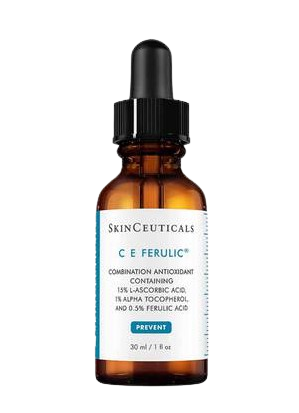
This is the serum that all other vitamin C serums are quietly trying to be. The combination of 15% L-ascorbic acid (the most potent, most researched form of vitamin C), vitamin E, and ferulic acid isn’t just marketing—ferulic acid genuinely stabilizes vitamins C and E and enhances their effectiveness. The result is a formula that’s been delivering consistent, visible brightening for over a decade and remains the clinical gold standard. On mature skin, the difference shows in overall luminosity, a more even tone, and a subtle but real improvement in firmness over time. It’s not cheap—not even close. But it’s the one dermatologists actually use themselves, and it’s worth every penny if your budget allows.
Best for: Anyone serious about brightening who wants the benchmark formula.
Price point: Splurge (around $185)
2. The Smart Middle-Ground That Overdelivers
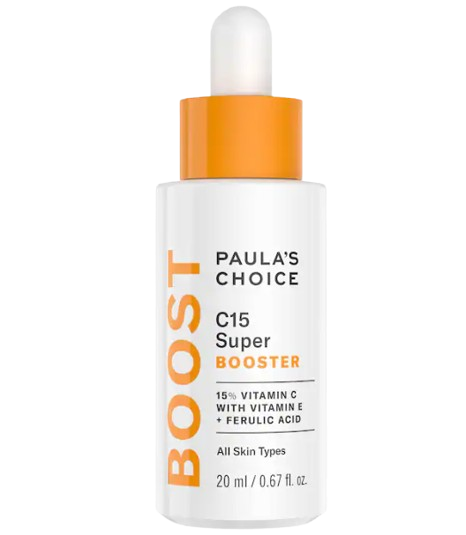
Paula’s Choice C15 Super Booster
Paula’s Choice built its reputation on transparency about ingredients, and this serum earns its place near the top of any ranking. It uses the same 15% L-ascorbic acid and ferulic acid combination as the category leader, at roughly a third of the price, in a stable, fragrance-free formula that’s specifically suited to sensitive and mature skin. It layers well under moisturizer and SPF without pilling, absorbs quickly, and delivers genuine brightening with consistent use. If the SkinCeuticals price point isn’t where you want to be, this is the move. Wrongomundo to dismiss it just because it costs less.
Best for: Mature skin that wants clinical-level results without the clinical-level price.
Price point: Mid-range (around $55)
3. The Drugstore Overachiever
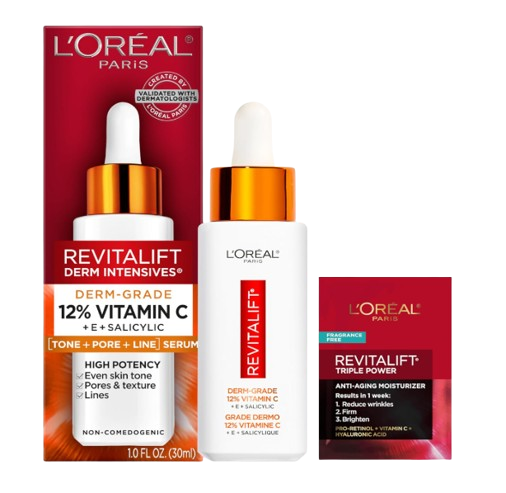
L’Oréal Paris Revitalift 12% Pure Vitamin C Serum
The percentage matters here: 12% pure L-ascorbic acid in a drugstore serum is genuinely impressive, and L’Oréal has the formulation expertise to make it stable and effective. This serum visibly reduces dark spots and uneven tone with consistent use, and the texture is lightweight enough to wear comfortably under sunscreen. The packaging—an opaque, airless pump—is exactly right for vitamin C stability, protecting the formula from light and air oxidation. For the price, this competes squarely with serums at three times the cost. Looking great shouldn’t require a second mortgage, and this one proves it.
Best for: Anyone who wants real results at a price that doesn’t require commitment.
Price point: Budget-friendly (around $30)
4. The Glow-First Formula for Sensitive Skin
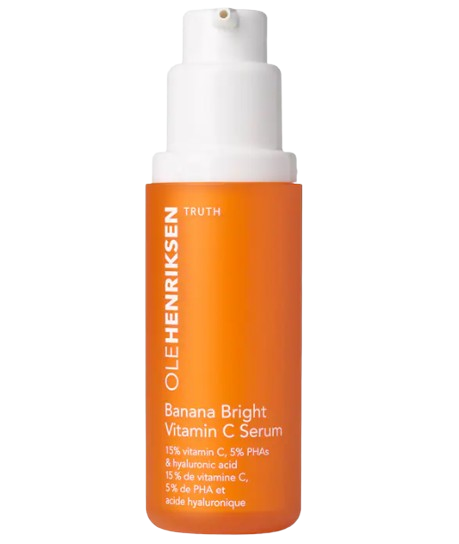
Ole Henriksen Banana Bright+ Vitamin C Serum
This one takes a different approach—instead of relying solely on L-ascorbic acid, it uses a more stable vitamin C derivative (ascorbyl glucoside) alongside optical brighteners that deliver an immediate, visible glow while the vitamin C works more gradually underneath. For women over 50 with reactive or sensitive skin that doesn’t tolerate high-percentage L-ascorbic acid well, this is a genuinely smart alternative. It won’t deliver the same clinical depth as a 15% pure formula, but the texture is beautiful, the skin-feel is luxurious, and the immediate brightness is real. Sometimes you want results you can see right now.
Best for: Sensitive or reactive skin, or anyone who wants an instant glow alongside longer-term brightening.
Price point: Mid-range (around $70)
5. The Minimalist Pick That Gets the Job Done
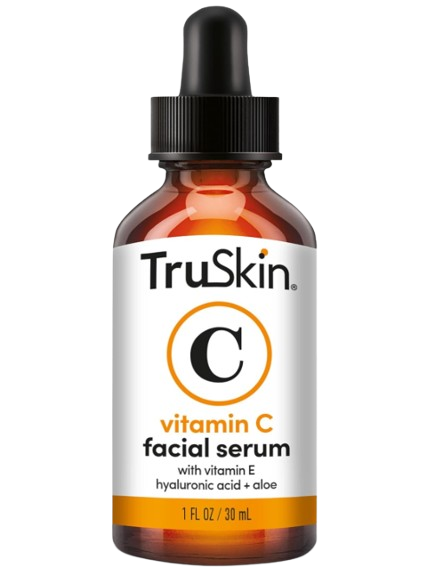
This serum has an enormous following for good reason: it’s straightforward, stable, and effective at a price point that makes daily use completely guilt-free. It uses a blend of vitamin C, hyaluronic acid, and vitamin E in a lightweight formula that absorbs without residue. It doesn’t have the potency of a 15% L-ascorbic acid formula, and it’s not trying to—it’s the serum for someone who wants to introduce vitamin C into their routine without overthinking it or overspending on it. For consistent, low-commitment brightening with added hydration, it delivers.
Best for: Vitamin C beginners, or anyone who wants an easy daily option that won’t break the budget.
Price point: Budget-friendly (around $22)
6. The Luxury Experience With a Few Caveats
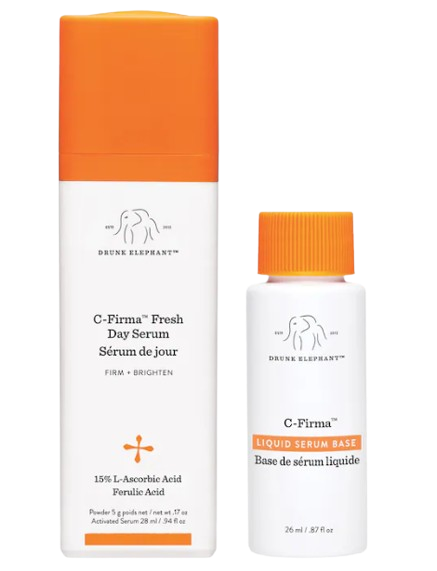
Drunk Elephant C-Firma Fresh Day Serum
The “Fresh” in the name is the key feature here: this serum comes as two separate components you mix together before use, which keeps the vitamin C stable until the moment of application. It’s a clever solution to vitamin C’s oxidation problem, and the formula—15% L-ascorbic acid, ferulic acid, vitamin E, plus a botanical blend—is excellent. The caveat is the ritual. Mixing components every morning adds a step that some people love (it does feel intentional and a little indulgent) and others find fussy. The price is also firmly in splurge territory. If the mixing-every-morning routine appeals to you and the budget is there, this is a genuinely beautiful formula. If you want something you can grab and go, one of the options above will serve you better.
Best for: Anyone who enjoys a considered skincare ritual and wants a top-tier formula.
Price point: Splurge (around $80)
What to Know Before You Buy
Packaging is not optional. Vitamin C (L-ascorbic acid specifically) degrades rapidly when exposed to light and air. An opaque, airless pump or a dark glass bottle is the minimum. If a serum comes in a clear jar or a dropper bottle that leaves the formula exposed to air every time you open it, the formula will oxidize before you finish it—no matter how good the ingredients were to begin with.
Color is a signal. Fresh vitamin C serum is clear to very pale yellow. If it’s turned orange or brown in the bottle, it’s oxidized and significantly less effective. This is your cue to replace it, not use it up anyway.
Start slow if you have sensitive skin. L-ascorbic acid is an acid, and high-percentage formulas can cause tingling, redness, or irritation on mature skin—especially skin that’s also using retinol or exfoliating acids. Start with every-other-day use, apply to dry skin, and layer with a good moisturizer. If irritation persists, a vitamin C derivative formula (like the Ole Henriksen) is a gentler path to the same destination.
Vitamin C needs SPF to do its job. Vitamin C protects against oxidative damage from UV exposure, but it is not a sunscreen substitute. For maximum effectiveness—and for protecting the results you’re getting—apply SPF 30 or higher every morning after your serum.
Consistency beats concentration. A 10% formula used every day will outperform a 20% formula used occasionally. The most effective vitamin C serum is the one you’ll actually use.
How to Use Vitamin C Serum on Mature Skin
Apply to clean, dry skin. After cleansing and before moisturizer. Some formulas specify fully dry skin (wait 2-3 minutes after washing); check your specific product’s instructions.
A few drops is enough. Three to five drops covers the full face and neck. More product doesn’t mean more results—vitamin C absorbs to saturation.
Layer strategically. Vitamin C goes on before moisturizer and before SPF. If you use retinol, use vitamin C in the morning and retinol at night—they work better separately.
Store it correctly. Keep your serum in a cool, dark place—not on a sunny windowsill or a steamy bathroom shelf. Some people refrigerate theirs, which genuinely extends shelf life.
Give it time. Most people see initial brightening within 2-4 weeks. Significant improvement in dark spots and overall tone takes 8-12 weeks of consistent use. Don’t abandon a good formula after two weeks because you’re not yet seeing dramatic results.
Mini FAQ
L-ascorbic acid is the pure, active form of vitamin C—most potent, most researched, most unstable, most likely to cause irritation at high concentrations. Derivatives (ascorbyl glucoside, ascorbyl tetraisopalmitate, sodium ascorbyl phosphate) are more stable, gentler, but convert to active vitamin C in the skin at varying rates and are generally less potent. For sensitive or reactive skin, derivatives are often the smarter choice.
Yes, but not at the same time. Use vitamin C in the morning (where it pairs beautifully with SPF) and retinol at night. Using both in the same routine can increase irritation without increasing results.
Technically yes, but it’s significantly less effective. Oxidized vitamin C won’t hurt your skin, but it won’t deliver the brightening results you’re paying for. Replace it.
High-percentage L-ascorbic acid can trigger flushing or irritation in rosacea-prone skin. A derivative formula at a lower concentration, used every other day, is a safer starting point. Patch test first, and consult your dermatologist if you’re unsure.
With daily use, most 1 oz serums last 6-8 weeks. This factors into the real cost-per-use calculation—a $35 serum you replace every 8 weeks may cost more annually than a $90 one that lasts longer, depending on the formula and your usage.
✨ Beth’s Take: What I Learned After Years of Choosing Wrong
I spent a long time assuming that vitamin C serum price and vitamin C serum quality were the same thing. I bought beautiful bottles with elegant packaging and interesting ingredients lists and then wondered why my skin didn’t look particularly brighter. The answer, I eventually learned, was mostly packaging and stability.
The first time I understood what a well-formulated vitamin C serum actually does, I was using the SkinCeuticals C E Ferulic—yes, the expensive one—and about six weeks in I noticed that the uneven tone I’d written off as permanent was genuinely less visible. Not dramatically, not overnight, but measurably. That sent me down a research rabbit hole, and I came out of it understanding that ferulic acid stabilization and proper opaque packaging were the variables that actually mattered—not the brand name or the price tag.
The Paula’s Choice C15 is now my everyday serum, because the formulation is nearly identical to the benchmark and the price means I don’t ration it. I save the SkinCeuticals for when I want to invest in a targeted treatment period—after sun exposure, before an event, during winter when my skin needs extra support. Both earn their place. What doesn’t earn its place anymore: anything in a clear jar, anything that’s turned color in the bottle, and anything I bought because the packaging was pretty. Mature skin deserves better than that—and so does your budget.
More Skincare Worth Exploring
If vitamin C is one piece of your routine, pairing it with the right supporting products makes a real difference. For ingredients that calm and strengthen alongside brightening, my post Redness Must-Haves That Visibly Calm Sensitive Skin in Weeks! covers the barrier-repair serums and moisturizers that work beautifully alongside a vitamin C serum—especially if your skin runs reactive. And for a broader look at proven anti-aging ingredients (retinol, peptides, LED devices) that complement what vitamin C does in the morning, 6 Anti-Aging Skincare Gifts That Actually Deliver Results is worth a read.
Closing Thoughts
Ready to Find Your Vitamin C Serum?
Not every serum on this list will be right for your skin or your budget—but one of them will. Start with the packaging (opaque, airless), check the form of vitamin C, and commit to 8-12 weeks of consistent use before you decide if it’s working. If you have sensitive skin, start with a derivative formula every other day and work up. If budget is a consideration, the L’Oréal and TruSkin options genuinely deliver. And if you want the benchmark, the SkinCeuticals is worth saving for. The goal isn’t the most expensive serum in the lineup. It’s the one you’ll actually use—consistently, correctly, and with SPF after.





LEAVE A COMMENT